
Custom Railing / San Jose & South Bay
Deck & Balcony Railings in San Jose, CA
Guards for backyard decks, second-story balconies and hillside view platforms, anchored into sound framing and checked against the 30-inch trigger and 42-inch height before we weld. Published price ranges and a free on-site measure.
- Licensed & InsuredEvery job
- In-Shop FabricationBuilt to measure
- Free On-Site EstimatesWritten ranges
Deck & Balcony Railings in San Jose, Anchored Like Structure
We design, fabricate and install deck and balcony railings in San Jose, from low backyard decks to second-story balconies and tall decks hanging off foothill lots. A deck railing is a safety part before it's a style choice: once a deck sits more than 30 inches above grade it needs a guard 42 inches tall, and that guard has to hold a 200-pound push at the top rail. So every drawing we make is checked against those numbers and the 4-inch sphere rule before any metal is cut.
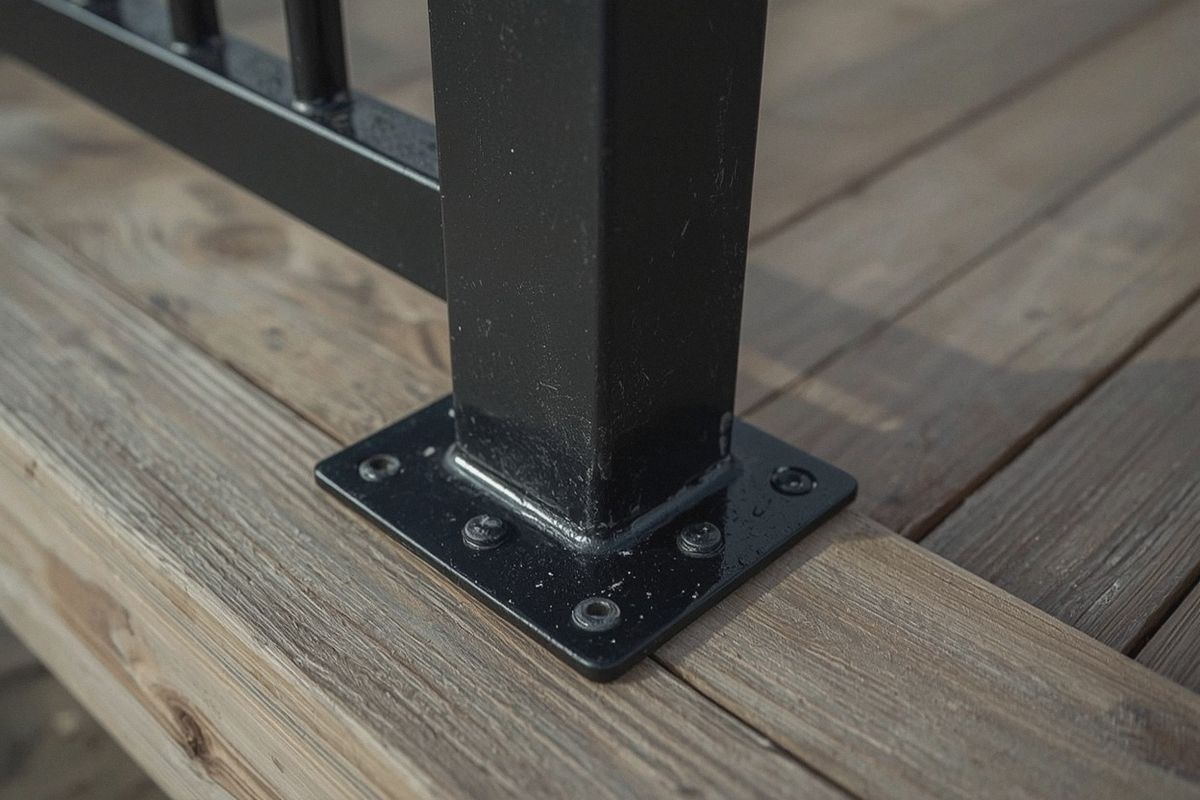
The part most people never see matters most. A good-looking railing bolted to a soft rim joist will fail, so we check the framing where each post lands and through-bolt into solid wood with blocking, or core-drill into concrete. If the framing isn't sound, we tell you before we quote the railing.
Call (408) 409-8723 for a free on-site estimate, or price a run in a minute with our railing cost calculator.
What a Deck Railing Job Includes
- A free site visit measuring each run, deck height at every corner and the grade drop at the outer edge.
- A probe of the rim joist, blocking or slab at every planned post location.
- Shop drawings showing post spacing, rail height and infill gaps for your approval.
- Removal and haul-away of the old railing.
- Shop fabrication, welding and finishing in powder coat over zinc primer or galvanizing.
- Installation with through-bolted or core-drilled post anchorage, plus permit and HOA details if your project needs them.
- Options: drink-rail top caps, stair gates, matching stair handrails and privacy panels.
Signs Your Deck or Balcony Railing Is Due
About 60% of San Jose's homes were built before 1980 (Census ACS 2020–24), and a lot of the decks behind them still carry their original railings. Watch for:
- Posts that shift when you lean on the top rail.
- Rust bleeding from iron post bases or bolts onto the decking.
- Gray, split wood rails and balusters that rattle.
- Soft or dark wood around the post bolts at the rim joist.
- A guard under 42 inches, or baluster gaps wider than 4 inches.
- A remodel or new deck surface that will trigger a permit anyway.
Not sure it needs replacing? Our railing repair service will tell you whether a fix or a new railing makes more sense.
Deck Railing Code: The 30-Inch Trigger and 42-Inch Guard
Deck and balcony guards fall under the California Residential Code and Building Code. The numbers we design to:
- Guard required where the walking surface is more than 30 inches above the grade below, measured within 36 inches horizontally of the edge.
- Guard height of 42 inches.
- Openings that stop a 4-inch sphere, or 6 inches at the triangle under a stair rail.
- Loads: 200 pounds concentrated at the top rail; infill resists 50 pounds on a 1-square-foot area; commercial guards add 50 pounds per linear foot.
- Stair handrails at 34–38 inches above the nosing, continuous and graspable.
The sloped-lot catch. That 30-inch measurement runs to the grade below the edge, not to the yard by the back door. On a hillside lot, a deck that's one step off the kitchen can stand well past 30 inches at its outer edge, so it needs a full guard even when it doesn't feel high.
Permits. Replacing more than about half of an existing guard is commonly treated as a replacement that must meet current code. Rules vary by city: the Town of Los Gatos handout requires a permit for all decks over 30 inches above grade at any point and engineering for decks 6 feet or more above grade, and Saratoga's objective design standards call for a 4-foot opaque wall on upper-story balconies near an R-1 setback line. For San Jose, read our San Jose railing permit guide and confirm with the building division.
Deck Railing Materials Compared
| Material | View | Upkeep | Fire behavior | Installed per ft |
|---|---|---|---|---|
| Powder-coated aluminum | Good with slim pickets | Very low, no red rust | Noncombustible | $50–$200 |
| Ornamental iron (steel) | Good, classic profile | Low with zinc primer under powder coat | Noncombustible | $65–$135 |
| Stainless cable | Excellent, thin lines | Occasional re-tensioning | Noncombustible with metal posts | $75–$260 |
| Tempered or laminated glass | Unbroken | Clean the panels | Noncombustible | $150–$600 |
Cable is the favorite on view decks, but it needs posts about every 4 feet and cables about 3 inches apart to pass the 4-inch test once tensioned. Glass gives the cleanest view and blocks wind on an exposed balcony. Aluminum is the budget-friendly, low-upkeep choice, and iron gives the most traditional look. See aluminum railings, cable railings and glass railings for the full detail on each.
How a Deck Railing Project Runs
Measure & Probe
We measure every run and test the framing or concrete where each post will land.
Drawings & Check
Shop drawings confirm height, openings and post spacing for your sign-off.
Permit & HOA
We supply railing details for any permit or architectural review.
Fabricate
Posts, rails and infill are cut, welded and test-fitted in our shop.
Finish
Zinc primer or hot-dip galvanizing under an oven-cured powder coat.
Anchor & Inspect
Posts are through-bolted or core-drilled, then the guard is load-checked with you.
Hillside Lots, Fire Zones and Fault Lines
Hillside decks. In the east and south San Jose foothills, along the Evergreen and Almaden edges, decks often step out over a falling slope. We size posts and anchorage for the tall downhill side and measure the 30-inch trigger where the grade actually drops.
Fire zones. CAL FIRE's 2025 Fire Hazard Severity Zone maps, adopted by San Jose on June 17, 2025 (Ord. 31213), put roughly 7,100 acres of the city in Very High and about 15,800 in High. New homes and many additions in High and Very High zones (and anywhere in the SRA) now fall under California's new Wildland-Urban Interface Code. Check with your building department for your project. No rule we know of mandates a metal railing, but steel, aluminum and tempered glass are noncombustible, and the deck edge is exactly where embers collect. Check your address on the state fire hazard map viewer and read our guide to wildfire-resistant deck railings.
Fault lines. USGS maps the Hayward fault zone running southeast to the Evergreen area of eastern San Jose, and the Calaveras fault bounding the east side of the valley. No code calls for a special seismic railing, but engineered, through-bolted post anchorage and welded joints are a lot more forgiving than a 1970s wood rail lag-screwed into a tired rim joist.
Apartment balconies. On buildings with three or more units, SB 721 inspections cover wood-supported balconies more than 6 feet above ground and their railings, and the January 1, 2026 deadline has passed. See balcony railing replacement for building-wide work.
Deck Railing Cost in San Jose
| Railing type | Installed per linear foot | Typical project |
|---|---|---|
| Exterior deck railing (all types) | $20–$600 | ~$400–$4,800 |
| Powder-coated aluminum | $50–$200 | ~$400–$4,800 |
| Ornamental iron | $65–$135 | ~$700–$6,000 |
| Stainless cable | $75–$260 | ~$3,750–$13,000 |
| Glass | $150–$600 | Premium tier, quoted per deck |
Corners and turns (often 20–30% more), stairs, deck height, hillside access, rotted rim joists, HOA-specified finishes and permits (about $50–$500) all move the number, and South Bay labor tends to push toward the high end. These are honest ranges, not quotes. A free on-site measure sets your real price, so call (408) 409-8723 to book one.
Why Choose Us for Deck and Balcony Railings
Framing Checked Before Posts Go In
Older South Bay decks often hide a soft rim joist behind a decent-looking fascia. At every planned post location we probe the framing or slab, and posts are through-bolted into solid wood with blocking or core-drilled into concrete, never lag-screwed into rot. If the framing needs repair first, you hear it at the estimate with a clear scope, so the new railing isn't bolted to the same weak spot that loosened the old one.
Every Drawing Meets the Numbers
Each shop drawing is checked against the 42-inch guard height, the 4-inch sphere rule and the post spacing your infill needs before any steel is cut. On a sloped lot we measure the grade drop at the outer edge, where the 30-inch trigger usually lands. You sign off on heights and gaps before fabrication, and the guard is load-checked with you on install day.
Noncombustible, Coated to Last
Parts of San Jose, Los Gatos, Saratoga and Cupertino are mapped High or Very High on the 2025 fire hazard maps. Every railing we build is steel, aluminum, stainless cable or tempered glass, all noncombustible. Steel gets zinc primer or hot-dip galvanizing under oven-cured powder coat, which handles the long dry season and the damp winters better than paint, and our licensed, insured crew installs it.
Related Services
Pair a deck guard with wrought iron railings on the front steps, add a pool or side-yard entry with custom gates, or see ADA and commercial handrails for shared stairs. Learn about San Jose Custom Railing or request a deck railing estimate.
FAQ
Questions, Answered
Straight answers on cost, code, permits and materials. Still unsure? Call and ask.
How tall does a deck railing need to be in San Jose?
Where a deck or balcony sits more than 30 inches above the grade below, California requires a guard 42 inches tall, with openings small enough to stop a 4-inch sphere. Confirm your project with the City of San Jose building division before you build.
My deck is low by the house but high at the far edge. Does it need a guard?
Probably. The 30-inch measurement is taken to the grade below the edge, within 36 inches horizontally, not to the ground by the back door. On a sloped lot the outer edge often crosses 30 inches, and that part of the deck needs a full 42-inch guard. We measure it on site.
Can you replace the railing without rebuilding my whole deck?
Usually, yes, as long as the framing where the posts attach is sound. We probe the rim joist and blocking at each post location. If we find rot, we tell you before quoting so the framing can be repaired first and the new railing has something solid to bolt into.
Are metal railings better in a fire hazard zone?
Steel, aluminum and tempered glass railings are noncombustible, while wood rails sit right at the deck edge where embers collect. No rule we know of requires a metal railing, but new homes and many additions in High and Very High zones now fall under California's Wildland-Urban Interface Code, so check with your building department.
Does SB 721 cover the railings on my apartment balconies?
On buildings with three or more units, SB 721 covers balconies, decks, stairs and walkways more than 6 feet above ground that rely on wood for support, including their railings. The first inspection deadline was January 1, 2026, and re-inspection follows every 6 years. We can replace railings flagged in a report.
Free on-site estimate
Ready to get started?
San Jose Custom Railing designs, fabricates and installs custom railings across San Jose, CA and the South Bay. Licensed and insured, drawings checked against California code, and permit and HOA paperwork handled for you.