
Custom Railing / San Jose & South Bay
Cable Railings in San Jose, CA
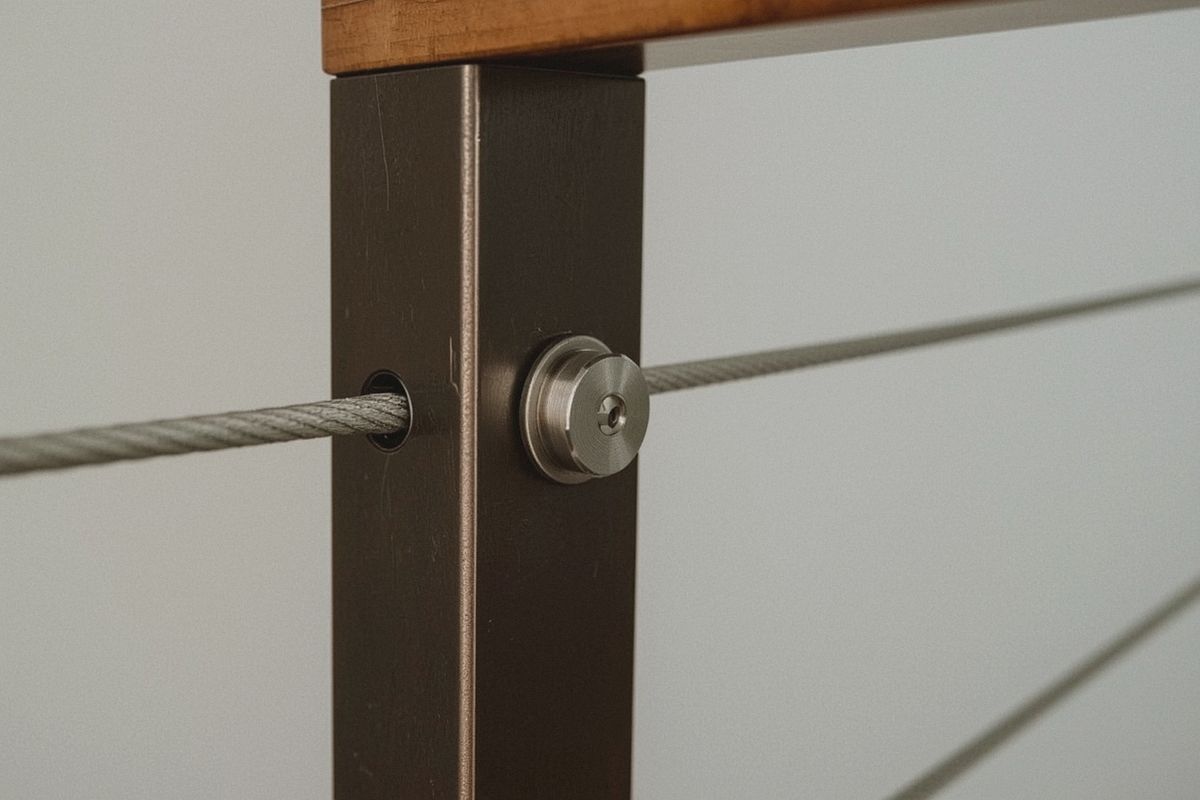
Thin 316 stainless cable on steel or aluminum frames keeps the view open from foothill decks and Eichler patios, with runs about 3 inches apart so the rail passes the 4-inch sphere test.
- Licensed & InsuredEvery job
- In-Shop FabricationBuilt to measure
- Free On-Site EstimatesWritten ranges
Cable Railings in San Jose for Decks That Face a View
Our cable railings in San Jose are built for decks where the view is the point: foothill homes looking across the valley, second-story decks and townhome rooftops. Thin runs of 316 stainless cable nearly disappear from a few steps back, which makes cable the go-to upgrade from chunky wood balusters.
We fabricate the frame (steel or aluminum posts and the top rail) in our shop, then install and tension the cable on site. Cable only works when posts are stiff, spacing is tight and tension is right; get one wrong and the cables spread under a push.
Want a ballpark first? Run your deck length through our railing cost calculator, then call (408) 409-8723 to book a free on-site measure.
What Comes With a Cable Railing Install
- A free site visit to measure the deck and check what the posts will anchor into.
- Shop drawings with post spacing, cable count and spacing, top rail profile and end-post details.
- Drawing support for a building permit or HOA review.
- Steel or aluminum posts and top rail, fabricated and powder coated in our shop.
- 316 stainless cable, fittings and tensioners, installed and tensioned on site.
- A final pass with a 4-inch sphere gauge along every run, and haul-away of the old railing.
Is Cable the Right Call for Your Deck?
Cable fits best when:
- You have a view worth keeping, whether that is the hills above Almaden Valley or the valley floor from an east-side deck.
- Your wood rail is graying, checking and loosening after years of dry summers.
- The house is modern or mid-century and a heavy picket rail looks wrong.
Cable is a weaker choice when:
- Privacy is the goal. Cable hides nothing, and some hillside towns want solid guards on balconies that face a neighbor.
- The existing posts are wood and soft at the base. Every tensioned cable pulls hard on the end posts, and rotted wood will not hold it.
- You have a climber at home and want no horizontal footholds at all (more on that below).
Cable Railing Specs, Frames and Hardware
Three numbers drive a cable rail: posts roughly 4 feet apart so the cables cannot deflect too far under a push, cable runs about 3 inches apart so the gap stays under 4 inches even when pressed, and 1x19 316 stainless cable in 1/8-inch or 3/16-inch diameter. The 1x19 construction is stiff and stretches less than flexible rope-style cable, and 316 stainless holds up better than lower grades in damp bay air.
| Option | Look | Best for | Installed price |
|---|---|---|---|
| Powder-coated metal posts, 1/8-inch 316 cable | Slim and open | Most view decks | $75–$140 per ft |
| Drink rail top, 3/16-inch cable, hidden tensioners | Cleaner ends, wide flat top | Entertaining decks | $140–$200 per ft |
| Stainless posts, custom fabricated frame | All-metal, architectural | Statement decks, rooftops | $200–$260 per ft |
| Vertical cable infill | Upright lines, no horizontals | Homes with young children | Quoted per project |
Swaged end fittings are crimped on for a very clean look, while swageless fittings can be adjusted and reused. Top rails come in steel, aluminum or a wood cap.
Passing the 4-Inch Sphere Test With Cable
California requires a guard where a deck sits more than 30 inches above grade, and the guard must be 42 inches tall. No opening can pass a 4-inch sphere. The top rail must resist a 200-pound concentrated load, and infill must handle 50 pounds on one square foot.
That is why spacing and tension work together. A cable set at 3 inches that sags or flexes can open past 4 inches under a hand, so we keep posts close, tension every run and test each bay with a sphere gauge before we leave.
What about the ladder effect, the worry that kids can climb horizontal cable? Horizontal cable is widely permitted on homes that meet the opening and load rules, but your plan checker has the final word. Vertical cable, glass or iron pickets remove the footholds if that worries you. A new deck guard often needs a permit, too; see our San Jose railing permit guide.
Step by Step: From Measure to Final Tension
Measure and Check Structure
We measure the deck and probe the framing or concrete each post will bolt to.
Draw the Layout
Drawings fix post spacing near 4 feet and cable spacing near 3 inches.
Review Code and Permits
Heights, openings and end-post loads are checked, and permit or HOA sets go out if required.
Fabricate the Frame
Posts and top rail are cut, drilled for cable and welded in our shop.
Finish the Metal
Steel is zinc-primed or galvanized and powder coated; stainless parts stay bright.
Install and Tension
Posts are anchored, cable is run and tensioned, and every bay gets the sphere test.
Cable in South Bay Heat, Bay Air and Fire Zones
Cable takes the valley's long dry season well. Stainless does not check, split or need stain the way a wood rail does, and that matters here: NOAA normals show essentially no rain from June through September, and the Los Gatos station averages about 27 days a year at 90°F or hotter.
Near the Alviso, Milpitas and Sunnyvale baylands, damp, salt-tinged air reaches the deck, so we pair 316 stainless with galvanized or zinc-primed posts there.
Fire is the other factor. Parts of the San Jose, Los Gatos, Saratoga and Cupertino foothills are mapped Very High on the 2025 Fire Hazard Severity Zone maps. New homes and many additions in High and Very High zones (and anywhere in the State Responsibility Area) now fall under California's new Wildland-Urban Interface Code, so check with your building department for your project. That code does not single out railings, but a metal and stainless rail will not burn at the deck edge, where embers collect. Our wildfire-resistant deck railing guide goes deeper.
Shaking matters too: USGS puts the chance of at least one M6.7 or larger Bay Area quake before 2043 at 72%, so we through-bolt end posts to solid blocking or embed them in concrete rather than trusting lag screws in an old rim joist.
Cable on Eichlers and Mid-Century Homes
Cable suits the South Bay's Eichlers, with their low rooflines, post-and-beam framing and walls of glass. Sunnyvale's Eichler guidelines count more than 1,000 Eichler homes built there between 1949 and 1972, and Cupertino's Fairgrove neighborhood carries its own Eichler zoning. Where an Eichler patio or step sits less than 30 inches above grade, the code does not require a guard, which leaves room for a lower, lighter rail. See our Eichler railing ideas for more.
Many HOAs require architectural review for exterior changes, and we prepare those drawings along with any permit set.
What Cable Railing Costs in San Jose
Cable railing in San Jose typically runs $75–$260 per linear foot installed. Typical projects land around $3,750–$13,000, with about $9,000 for a 50-foot deck as a common middle. What changes the number:
- Post material (metal versus stainless), cable diameter and hidden tensioners.
- Corners and turns, which add roughly 20–30%, and stair runs, which need angled fittings.
- Mounting: fascia versus top mount, and any framing repairs found on the site visit.
- Permit fees of roughly $50–$500, plus hillside access.
These are planning ranges, not quotes. Your firm price comes after a free on-site estimate. For a material comparison, read cable vs glass vs iron railings.
The price estimator needs JavaScript. Call (408) 409-8723 for a free range by phone.
Why Deck Owners Choose Us for Cable
Tension You Can Test
Cable only passes inspection if it stays tight. Our layouts keep posts near 4 feet apart and cables about 3 inches apart, and before we leave we press a 4-inch sphere gauge between the runs in every bay. Cable stretches slightly as fittings seat, so we recheck tension at the final walkthrough and show you how to snug a tensioner yourself if a run ever loosens.
Posts Built for the Pull
End and corner posts take a constant load from every tensioned cable, and that is where light-duty kits tend to fail. We fabricate stiff end posts in our shop, weld the frame where we can, and anchor posts with through-bolts, added blocking or concrete embedment matched to the structure we find on the site visit. In a valley bounded by the Hayward and Calaveras faults, that anchorage is not optional.
Straight Answers on Price
We publish our cable range, $75–$260 per linear foot installed, on this page and in our cost calculator, so you can budget before anyone visits. The free on-site estimate then turns that range into a fixed number, broken out by posts, cable, fittings, stairs and permit work. Call (408) 409-8723 any day of the week between 7am and 6pm to set up a visit.
Cable Railings Around the South Bay
We install cable railings in Los Gatos, Saratoga, Cupertino, Sunnyvale, San Jose and Campbell. Saratoga's objective design standards call for an opaque wall at least 4 feet high on upper-story balconies near an R-1 district, and the Los Gatos hillside standards list solid railing walls as a privacy screen. On those sides we pair cable with solid panels.
Other Ways to Finish Your Deck
Compare glass railings, deck and balcony railings and aluminum railings, or fix a loose rail with railing repair. Read about our shop or request a free cable railing estimate.
FAQ
Questions, Answered
Straight answers on cost, code, permits and materials. Still unsure? Call and ask.
Is cable railing legal in California?
Yes, when it is built to code. The guard must be 42 inches tall where the deck is more than 30 inches above grade, no opening can pass a 4-inch sphere even when the cables are pushed, and the top must resist a 200-pound load. Posts about 4 feet apart and cables about 3 inches apart are how we meet the sphere rule. Your local plan checker has the final say.
What makes a cable railing go slack?
New cable stretches slightly as the fittings seat, and posts that flex or wood that shrinks can let tension drop. Most slack cables can be re-tensioned at the fittings. If the end posts are bending or the wood is soft, the fix is stiffer posts or better anchorage, not just more tension.
Should I choose 1/8-inch or 3/16-inch cable?
The 1/8-inch cable is the most invisible and works on most residential decks with posts about 4 feet apart. The 3/16-inch cable looks bolder and feels sturdier in the hand, and it is common on larger or upgraded systems. Both are 1x19 316 stainless in our builds.
Can you add cable to my existing wood deck posts?
Sometimes. Wood posts must be sound, properly sized and solidly attached, because tensioned cable pulls hard on the end and corner posts. We check them on the site visit. Often the better answer is new metal end posts with the wood posts reused or replaced in between.
How do I keep stainless cable looking new?
Rinse it with fresh water a few times a year, more often near the baylands, and wipe it down with a mild cleaner. Keep sprinklers aimed away from the rail. Check that tensioners are snug once a year, ideally before the rainy season starts in November.
Free on-site estimate
Ready to get started?
San Jose Custom Railing designs, fabricates and installs custom railings across San Jose, CA and the South Bay. Licensed and insured, drawings checked against California code, and permit and HOA paperwork handled for you.