
Wildfire-Resistant Deck Railing for South Bay Hillside Homes
Why the Deck Edge Is a Fire Weak Spot
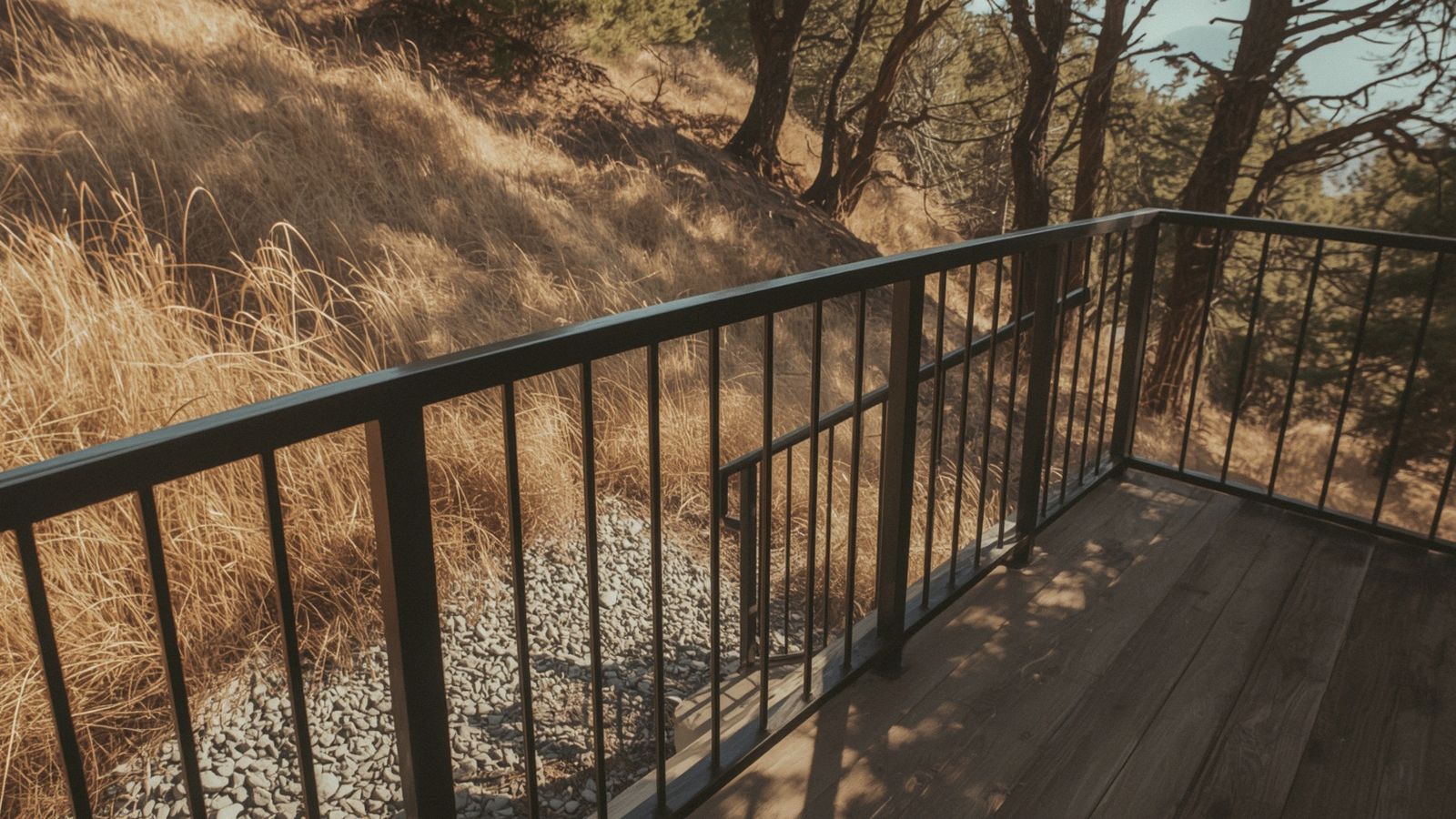
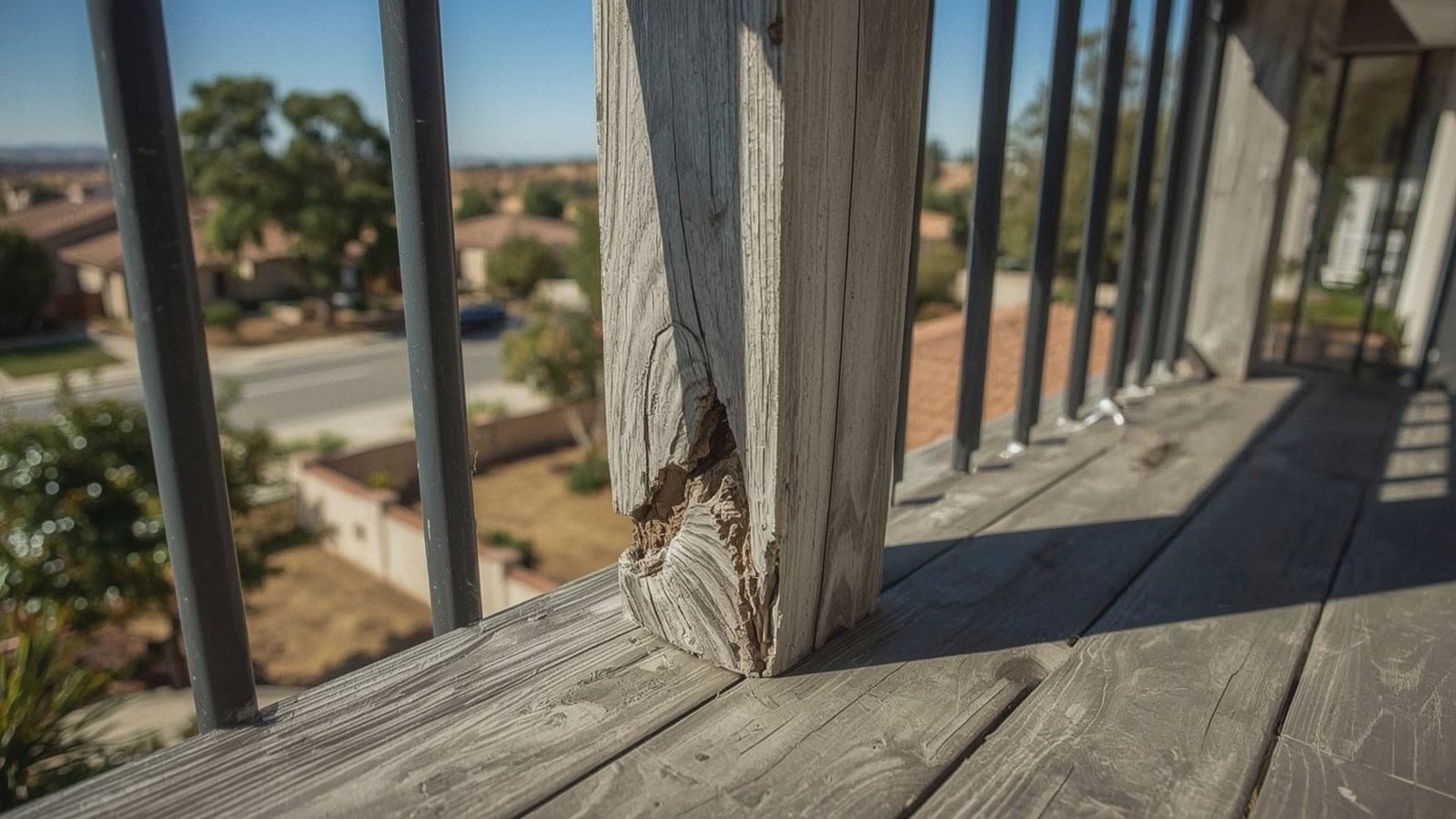
Wildfire-resistant deck railing starts with where a railing sits. The top rail and balusters run along the outside edge of the deck, which is the first surface wind-blown embers reach and the corner where dry oak leaves collect against the posts. A wood cap rail that has baked through five rainless months develops checks and splits, and those cracks can hold a glowing ember long enough to start it smoldering. A steel, aluminum or tempered glass railing in the same spot gives that ember nothing to feed on.
The South Bay's weather sets this up every year. At San José airport, about 91% of the year's rain falls between November and April (NOAA 1991–2020 normals), and essentially none falls from June through September. By early fall, a deck facing grass and oak slopes in the east and south San José foothills, or above Los Gatos and Saratoga, is looking straight at fuel, and the railing is the part of the house closest to it.
This guide covers what the 2025 fire hazard maps changed for Santa Clara County cities, what the new state wildland code says and does not say, and how we build a railing that takes one fuel source off the deck. To talk about your own deck, call (408) 409-8723.
What the 2025 Fire Hazard Severity Zone Maps Show
On February 24, 2025, the Office of the State Fire Marshal released new Fire Hazard Severity Zone maps for Local Responsibility Areas, the land that cities protect. The 2007 local maps only showed Very High zones. The new maps add High and Moderate, so far more South Bay parcels now carry a designation. San José adopted the maps on June 17, 2025 (Ordinance 31213), and Los Gatos adopted them the same night (Ordinance 2374).
| City | Very High (approx.) | High (approx.) | Where |
|---|---|---|---|
| San Jose | ~7,100 acres | ~15,800 acres | East and south foothills; ABC7 reported the largest High/Very High increase of any Bay Area city |
| Los Gatos | ~670 acres | ~2,800 acres | Hillside areas of town |
| Saratoga | ~1,170 acres | ~980 acres | Hillsides west of Saratoga-Sunnyvale Road and southwest of Highway 9 (city Safety Element) |
| Cupertino | ~1,050 acres | ~540 acres | Western foothills |
| Milpitas | None | None | Moderate only, in the eastern hills |
| Santa Clara, Campbell, Sunnyvale | None | None | No mapped zones |
These acreages are approximate figures from the state's 2025 local-area map data. City planning documents can count differently (Cupertino's draft safety update, for example, puts nearly 630 acres in Very High), so always check your own parcel on the State Fire Marshal's map viewer.
These are rough GIS figures clipped to city limits. Zone lines follow parcels, not neighborhoods, so look up your own address on the State Fire Marshal's viewer at osfm.fire.ca.gov/fhsz before assuming anything. The unincorporated hills around the valley are mostly State Responsibility Area, covered by CAL FIRE's Santa Clara Unit. That unit's 2020 SCU Lightning Complex burned 396,624 acres, mainly in the Diablo Range east of San José, and destroyed 225 structures.
Planning a railing project in San Jose or the South Bay? We measure on site for free and give you a written range before anything is fabricated.
How the New Wildland-Urban Interface Code Applies
On January 1, 2026, California's new Title 24 Part 7, the California Wildland-Urban Interface Code, took effect. It gathers the old Chapter 7A building rules and related fire code sections into a single code. Under the state's emergency supplement, it applies to new buildings in all State Responsibility Area land and in High and Very High zones, whether the state or a city designated them. Moderate zones are not on that list.
Put simply: new homes and many additions in High and Very High zones (and anywhere in the SRA) now fall under California's new Wildland-Urban Interface Code. Check with your building department for your project.
- No railing mandate. Part 7 does not include a provision that specifically requires noncombustible deck railings. The case for metal or glass is about physics, not a code line.
- Cities can add hardening rules. AB 130 freezes new residential building standards from October 1, 2025 to June 1, 2031, but wildfire hardening is one of the exceptions, so local fire-zone amendments are still possible.
- Guard rules should hold steady. The same freeze means the 42-inch guard, the 4-inch sphere rule and 34 to 38-inch handrails should stay put, so a railing built to today's numbers won't be outdated next cycle.
A railing swap on an existing deck is not a new building. A deck rebuilt as part of an addition in a High or Very High zone is a different story, so ask the building division before you lock in a design.
What Local Fire-Zone Reviews Already Look For
Even where the railing itself isn't regulated, the deck around it often is. Three local examples show where reviewers are focused:
- Saratoga. The city's WUI Fire Conformance Checklist (revised January 2026) asks applicants to confirm that the deck-to-wall intersection is protected, the walking surface within 10 feet is compliant and the deck underside is protected or enclosed.
- Los Gatos. The Town's Hillside Development Standards call for areas below decks to be enclosed to the ground with noncombustible materials or one-hour rated construction. They also require exposed metal to be painted to complement adjacent materials or anodized a dark color, and they cap exterior colors at a light reflectivity value of 30. On hillside lots that steers railing finishes toward black, dark bronze and earth tones.
- San José. The Fire Department's 2026 wildfire presentation lists noncombustible decks and a 5-foot ember-resistant Zone 0 next to the house among its home-hardening steps, and it says the last 5 feet of fence that touches the home should be noncombustible.
That last point applies to gates as well. A wood side-yard gate fastened to the wall of the house is the same weak link as a wood railing. A steel or aluminum gate and first fence panel keep that 5-foot strip clear of fuel. Our custom gates are built for exactly that spot.
Railing Materials Compared for Ember Exposure
Every option below except wood is noncombustible. The differences are in upkeep, weight, view and price. Installed costs are our published 2026 South Bay ranges.
| Material | Burns? | Dry-season behavior | Installed per linear foot |
|---|---|---|---|
| Powder-coated aluminum | No | No rust, no checking; light and quick to install | $50–$200 |
| Steel / wrought iron | No | Very stiff; needs zinc primer or galvanizing under the powder coat | $65–$135 (hand-forged $300–$900) |
| Stainless cable on metal posts | No | Open view; use a metal cap rail, not wood | $75–$260 |
| Tempered glass in a metal frame or shoe | No | Blocks some radiant heat and wind; needs cleaning | $150–$600 |
| Wood | Yes | Dries, checks and loosens at the fasteners every summer | Varies |
Mixed systems deserve a second look. A cable railing strung between wood posts under a wood drink rail still puts lumber at the deck edge. If the reason for the upgrade is fire, the posts and cap should be metal too. Our cable vs glass vs iron comparison covers the view and maintenance tradeoffs in more depth.
Details That Matter More Than the Material
A metal railing can still collect fuel if it is detailed carelessly. When we draw a railing for a fire-exposed deck, we check these points:
- Metal cap rail. A flat steel or aluminum top rail wide enough for a coffee cup, instead of a wood drink rail screwed on top.
- No debris traps. No built-in planter boxes, no closed post bases where leaves pack in, and a bottom rail high enough to sweep under while still blocking a 4-inch sphere.
- Sound anchorage. Through-bolted or embedded posts designed for the code's 200-pound guard load. A rail that pulls loose in a quake is no help during an evacuation.
- Finish built for heat and sun. Oven-cured powder coat over zinc primer or hot-dip galvanizing. In Los Gatos we pick colors that fit the reflectivity cap.
- Safety glazing. Tempered or laminated glass only. San José's residential guidebook treats all glazing in guards and railings as a safety-glazing location.
- The underside. If the deck framing below is exposed, we coordinate with your deck builder on enclosure or a noncombustible skirt where the city requires it.
Planning a Fire-Smart Railing Upgrade
Most fire-driven railing jobs we see are straightforward: an existing wood deck stays, the wood railing comes off, and a steel, aluminum or glass system goes on in its place. On a typical hillside deck the railing is a modest share of the cost of a full deck rebuild, and it removes the most exposed piece of wood on the structure.
Budget the materials using the ranges above, then allow for permits (roughly $50–$500 depending on the city and scope) and extra cost for corners, stairs and hard-to-reach hillside access. Hillside sites in Los Gatos and Saratoga often add design review and HOA steps, which we prepare drawings for. See our Santa Clara County railing permit guide for how the hillside towns handle review.
Start with our deck and balcony railings page, compare aluminum railings and glass railings, or read the local notes on our Los Gatos and Saratoga pages. When you are ready, call (408) 409-8723 for a free on-site estimate. We'll measure, look at the deck framing and anchorage, and give you a written price before anything is fabricated.
FAQ
Questions, Answered
Straight answers on cost, code, permits and materials. Still unsure? Call and ask.
Does California's new WUI code require a metal deck railing?
No provision in Title 24 Part 7 specifically requires noncombustible railings. The code applies to new buildings in High and Very High zones and in the State Responsibility Area, and it regulates other deck details. Metal or glass railings are a smart choice in those areas because they do not burn, not because the code names them.
How do I find out if my South Bay home is in a fire hazard zone?
Enter your address in the State Fire Marshal's Fire Hazard Severity Zone viewer at osfm.fire.ca.gov/fhsz, or use your city's map. Parts of San Jose, Los Gatos, Saratoga and Cupertino are mapped High or Very High. Milpitas has Moderate areas only, and Santa Clara, Campbell and Sunnyvale have no mapped local zones.
Is aluminum or steel better for a fire-zone deck?
Both are noncombustible. Aluminum is lighter, never rusts and is usually quicker to install. Steel is stiffer and suits ornamental or heavier designs, but it needs zinc primer or galvanizing under the powder coat. The right pick depends on the look you want, your budget and the deck structure.
Can I keep my wood deck and just replace the railing?
Yes, and it is one of the most common upgrades we do. We remove the wood railing, check the posts and rim joist, and anchor a metal or glass railing to sound framing. If the framing is rotted, we will tell you before fabrication so it can be repaired first.
Need Help in San Jose?
San Jose Custom Railing builds custom iron, cable, glass and aluminum railings across San Jose, CA and the South Bay. If this guide answered your question, the next step is a free on-site measure and a written range. See everything we do on our homepage, or reach out now.