
Custom Railing / San Jose & South Bay
Glass Railings in San Jose, CA
Tempered or laminated panels on a base shoe, spigots, standoffs or posts, anchored to engineered details for view decks, pool terraces, balconies and stairs. Nothing between you and the hills but clean glass.
- Licensed & InsuredEvery job
- In-Shop FabricationBuilt to measure
- Free On-Site EstimatesWritten ranges
Glass Railings in San Jose With an Unbroken View
We install glass railings in San Jose for decks, balconies, pool terraces, rooftop patios and interior stairs, using tempered or laminated safety glass set into a base shoe, clamped to posts, or held by stainless spigots or standoffs. Glass is the only guard that blocks wind without blocking the view.
Panels are cut and tempered to order by a glass supplier from our field measurements, so measuring precision matters most. We fabricate and set the metal: posts, base shoe runs, spigot plates, cap rails and stair brackets. Then we install the glass and check every panel for plumb, gap and load path.
Glass is the premium tier, so see a number early. Try our railing cost calculator or call (408) 409-8723 for a free on-site estimate.
Everything in a Glass Railing Project
- A free site visit to measure and check the structure the glass will anchor to.
- Drawings showing panel sizes, gaps, mounting method, cap rail and stair transitions.
- The hardware system's engineering data, plus permit and HOA submittal support.
- Posts, base shoe, spigots or standoffs supplied and finished, with powder coat on steel or aluminum parts.
- Glass ordered to size, then installed, leveled and sealed.
- A final walkthrough, cleaning and care tips.
When Glass Makes Sense, and When It Doesn't
Glass is worth the premium when:
- The view is the reason you bought the house, from the Los Gatos and Saratoga hillsides to a foothill deck in east San Jose.
- Afternoon breezes make the deck unpleasant and you want a windbreak you can see through.
- A pool terrace or rooftop needs a clean, modern edge.
- An interior stair or loft needs a guard that does not make the room feel smaller.
Think twice when:
- The deck catches dust, sprinkler spray or sap from overhanging trees. Glass shows everything.
- The guard faces a neighbor's yard. Clear glass offers no privacy, and some cities expect a solid guard on those sides.
Glass Types, Mounting Systems and Price Tiers
| System | What you see | Best for | Installed price |
|---|---|---|---|
| Posts with clamped tempered panels | Slim metal posts, glass between | Budget-conscious decks | $150–$260 per ft |
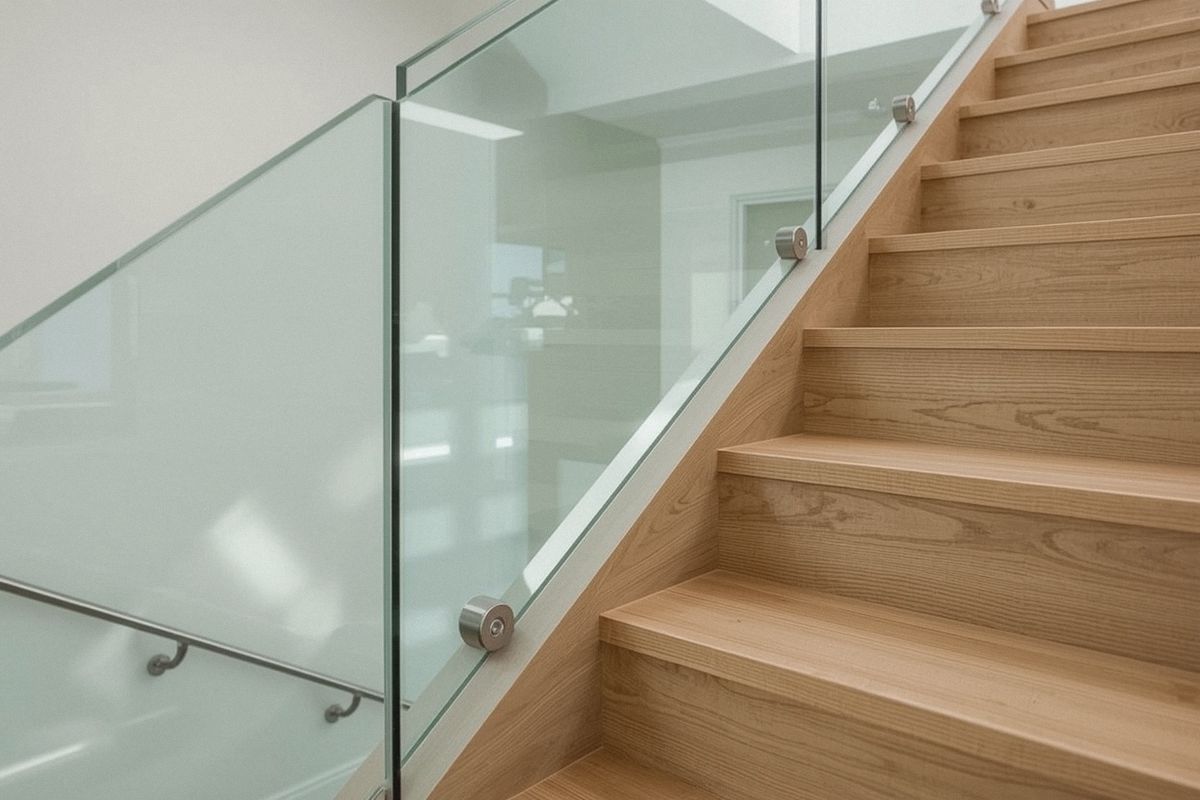
| Spigot or standoff mounted panels | Small stainless fittings, no posts | View decks, stairs, pool edges | $260–$400 per ft |
| Frameless base shoe | Continuous glass, hidden channel | Signature views, rooftops | $400–$600 per ft |
Tempered glass is heat-treated so it breaks into small, dull pieces instead of sharp shards. Laminated glass bonds two layers to a plastic interlayer, so a broken panel stays in the frame and keeps acting as a barrier until it is replaced. Laminated tempered panels combine both, and they are our usual recommendation for frameless guards high above grade. Low-iron glass removes the green edge tint of standard glass, and frosted or tinted panels work on privacy sides.
Glass Railing Rules Under California Code
Glass guards follow the same core rules as any guard: required where the walking surface is more than 30 inches above grade, 42 inches tall, no opening (including gaps between panels or at the floor) that passes a 4-inch sphere, and a top that resists a 200-pound concentrated load. Infill must resist 50 pounds on one square foot, and commercial guards under CBC 1607.9 add 50 pounds per linear foot along the top.
The glass itself must be safety glazing. Which type, how thick and whether a cap rail is needed depend on the hardware system's engineering and on whether the project is a house or a commercial or multifamily building under the California Building Code, which has its own glazing requirements for guards. We submit the system's engineering with your drawings and confirm with your building department before ordering glass. Our California railing code guide explains the basics.
How a Glass Railing Goes In
Measure the Site
Exact runs, floor elevations and the structure each anchor will bolt into.
Draw and Pick Hardware
Panel layout, gaps, mounting system, glass type and cap rail on scaled drawings.
Engineering and Permits
The system's engineering goes with your permit or HOA set when one is needed.
Fabricate the Metal
Posts, shoe runs, plates and brackets are cut, drilled and finished in our shop.
Order the Glass
Panels are cut and tempered to size from approved measurements.
Set, Level and Seal
Anchors go in, panels are leveled and sealed, and gaps are checked against the 4-inch rule.
Glass in South Bay Sun, Dust and Shaking Ground
The dry season is the main maintenance story for glass here. About 91% of San Jose's rain falls between November and April, so from late spring into fall nothing rinses the panels for you. Dust, pollen and sprinkler overspray dry into spots, especially on decks that catch afternoon sun. Plan on a soft cloth and a mild glass cleaner and aim sprinkler heads away from the rail.
Heat is less of a worry. Tempered glass handles sun easily, but dark metal caps get hot where July highs reach 84.9°F (Los Gatos), so lighter finishes help.
Glass is heavy, and the South Bay moves. The Hayward fault zone reaches into the Evergreen area, the Calaveras bounds the east side of the valley, and the 1989 Loma Prieta earthquake (M6.9) caused heavy damage in Los Gatos. A base shoe or spigot is only as good as what it bolts into, so we anchor to concrete or properly blocked framing at the hardware maker's engineered spacing, never to deck boards alone.
In fire zones, tempered glass and metal hardware are noncombustible, unlike a wood rail. Parts of San Jose, Los Gatos, Saratoga and Cupertino are mapped Very High on the 2025 maps; check your address on the OSFM viewer at osfm.fire.ca.gov/fhsz, and see our wildfire-resistant deck railing guide.
Privacy, Glare and Design Review
Clear glass and neighbor privacy rules do not always mix. Saratoga's objective design standards call for an opaque wall at least 4 feet tall on upper-story balconies and roof decks near an R-1 district, and the Los Gatos Residential Design Guidelines say balcony and deck sides that overlook a neighbor's windows or yard should be solid. On those sides we use solid or opaque panels and save clear glass for the view. The Los Gatos hillside standards also target glare visible from the valley floor, so expect design review questions about large expanses of glass.
In San Jose, a new glass guard is often a permit item, and many HOAs require architectural review. We prepare both submittals. Our HOA railing approval guide covers what committees usually ask for.
What a Glass Railing Costs in San Jose
Glass is the premium railing tier, at roughly $150–$600 per linear foot installed in San Jose. Post-and-clamp systems sit at the low end, spigot and standoff systems in the middle, and frameless base shoe at the top. What moves the price:
- Glass type: laminated and low-iron panels cost more than standard tempered.
- Panel count and shape: stairs need angled, custom-cut panels.
- Corners and turns (roughly 20–30% more) and the mounting surface.
- Hillside access for heavy panels, plus permit fees of roughly $50–$500.
These ranges are for planning; your firm price comes after a free on-site estimate. For a side-by-side look at every material, see our 2026 San Jose railing cost guide.
The price estimator needs JavaScript. Call (408) 409-8723 for a free range by phone.
Why Homeowners Trust Us With Glass
Measured Once, Measured Right
Custom glass cannot be trimmed on site, so a measuring mistake means reordering panels and waiting. We measure every run ourselves, verify floor and post elevations, and lock dimensions on drawings you approve before glass is ordered. Panel gaps are laid out against the 4-inch sphere rule on paper first, including the gap at the floor and the triangle beside stair treads, so nothing gets caught at inspection.
Anchored to Structure, Not Deck Boards
A glass guard has to resist a 200-pound load at the top while carrying heavy panels every day. We follow the hardware maker's engineered anchor spacing and bolt into concrete or solid blocking, adding blocking where existing framing is thin. With the Hayward fault zone reaching the Evergreen area and the Calaveras running along the valley's east side, we treat anchorage as the most important part of the job.
Help With the Paperwork
Glass draws more questions from plan checkers and HOA committees than any other railing. We assemble the drawings, product data and the system's engineering, and we know the hillside privacy rules in Saratoga and Los Gatos that can decide which sides get clear glass. If a reviewer sends back a comment, we answer it. Call (408) 409-8723 seven days a week, 7am to 6pm.
Glass Railings Throughout the South Bay
We install glass railings in Saratoga, Los Gatos, Cupertino, San Jose, Milpitas and Santa Clara. Hillside homes in Saratoga and Los Gatos lean toward frameless view guards, while in Milpitas, where about 35% of homes were built in 2000 or later and one in five is a townhome, glass is a popular swap for builder-grade balcony rails.
Explore Related Railing Options
Compare cable railings, plan a full project with deck and balcony railings, bring glass indoors with interior stair railings, or see ADA and commercial handrails. Read about our shop or request a free glass railing estimate.
FAQ
Questions, Answered
Straight answers on cost, code, permits and materials. Still unsure? Call and ask.
Tempered or laminated glass: which does my railing need?
Both are safety glass. Tempered breaks into small, dull pieces; laminated holds together after breaking, so the guard stays in place. Many homes use tempered panels with a cap rail, while frameless systems and commercial or multifamily projects often call for laminated. The hardware system's engineering and your building department decide the final spec.
Does a glass railing need a top rail?
Not always. A cap rail ties the panels together and is common on post and standoff systems. Some engineered frameless base shoe systems are designed to work without one, usually with laminated glass. We follow the manufacturer's tested details and what your plan checker approves.
How often will I need to clean a glass railing?
Expect more cleaning from June through September, when there is essentially no rain to rinse the panels. Most owners wipe them every few weeks with a soft cloth and mild glass cleaner. Aiming sprinklers away from the rail and adding a water-repellent coating cut down on spots.
Can glass railing go on my existing wood deck?
Often, if the framing is sound. Glass is heavy and the anchors carry real load, so we check the rim joist and add solid blocking where needed. Fascia-mounted spigots or standoffs are usually the best fit for wood decks, and rotted framing has to be repaired first.
What happens if a glass panel breaks?
Tempered glass falls out as small, dull pieces, which is why a cap rail matters on tempered systems. Laminated glass cracks but stays in place until it is replaced. Because we keep your panel sizes on file from the drawings, a replacement can be ordered to the same dimensions.
Free on-site estimate
Ready to get started?
San Jose Custom Railing designs, fabricates and installs custom railings across San Jose, CA and the South Bay. Licensed and insured, drawings checked against California code, and permit and HOA paperwork handled for you.