
California Railing Code: Guard Height, Baluster Spacing and Handrails
The California railing code numbers in one table
The California railing code comes down to a handful of numbers that apply to almost every deck, stair and balcony in San Jose and the South Bay. Homes fall under the California Residential Code and most commercial and multifamily buildings under the California Building Code, but the core guard and handrail figures are the same ones inspectors check on both.
| Rule | Requirement |
|---|---|
| When a guard is required | Walking surface more than 30 inches above grade, measured within 36 inches horizontally of the edge |
| Guard height | 42 inches |
| Openings | Must not pass a 4-inch sphere; 6 inches at the stair tread triangle |
| Handrail height | 34 to 38 inches above the stair nosing |
| Handrail grip | Graspable; Type I circular rails 1¼ to 2 inches in diameter |
| Guard and handrail load | 200-pound concentrated load at the top |
| Infill load | 50 pounds on a 1-square-foot area |
Local building departments enforce these numbers and can add their own requirements, so always confirm with yours before you build.
When a guard is required and how tall it must be
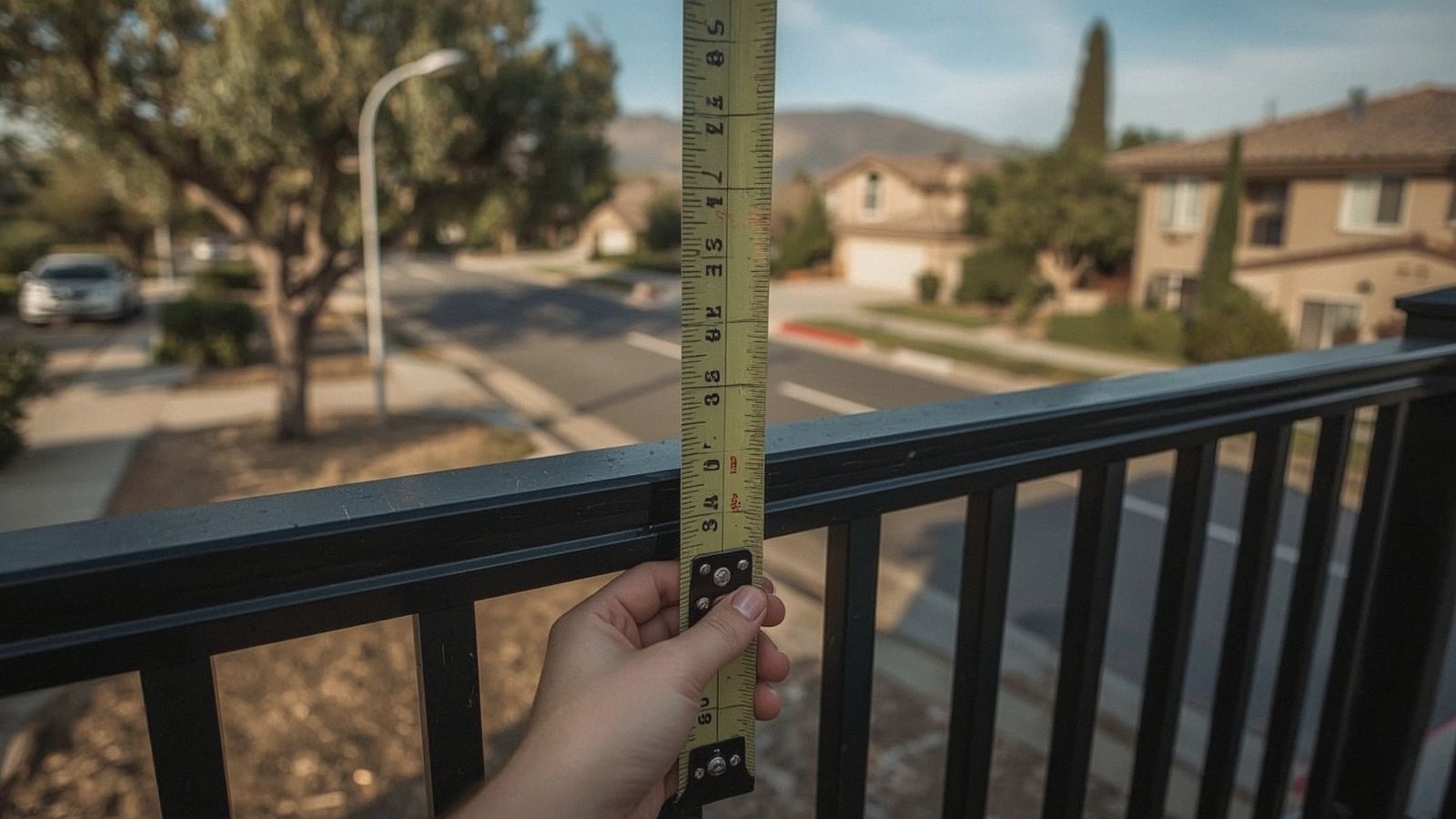
A guard is the barrier along an open edge. It is required wherever a walking surface (a deck, porch, balcony, landing, raised patio or the open side of a stair) is more than 30 inches above the floor or grade below, measured at any point within 36 inches horizontally of the edge. That last part catches people out. A deck that is 24 inches up at the house can be 34 inches up at the outer edge if the yard slopes away, and the outer edge is what counts.
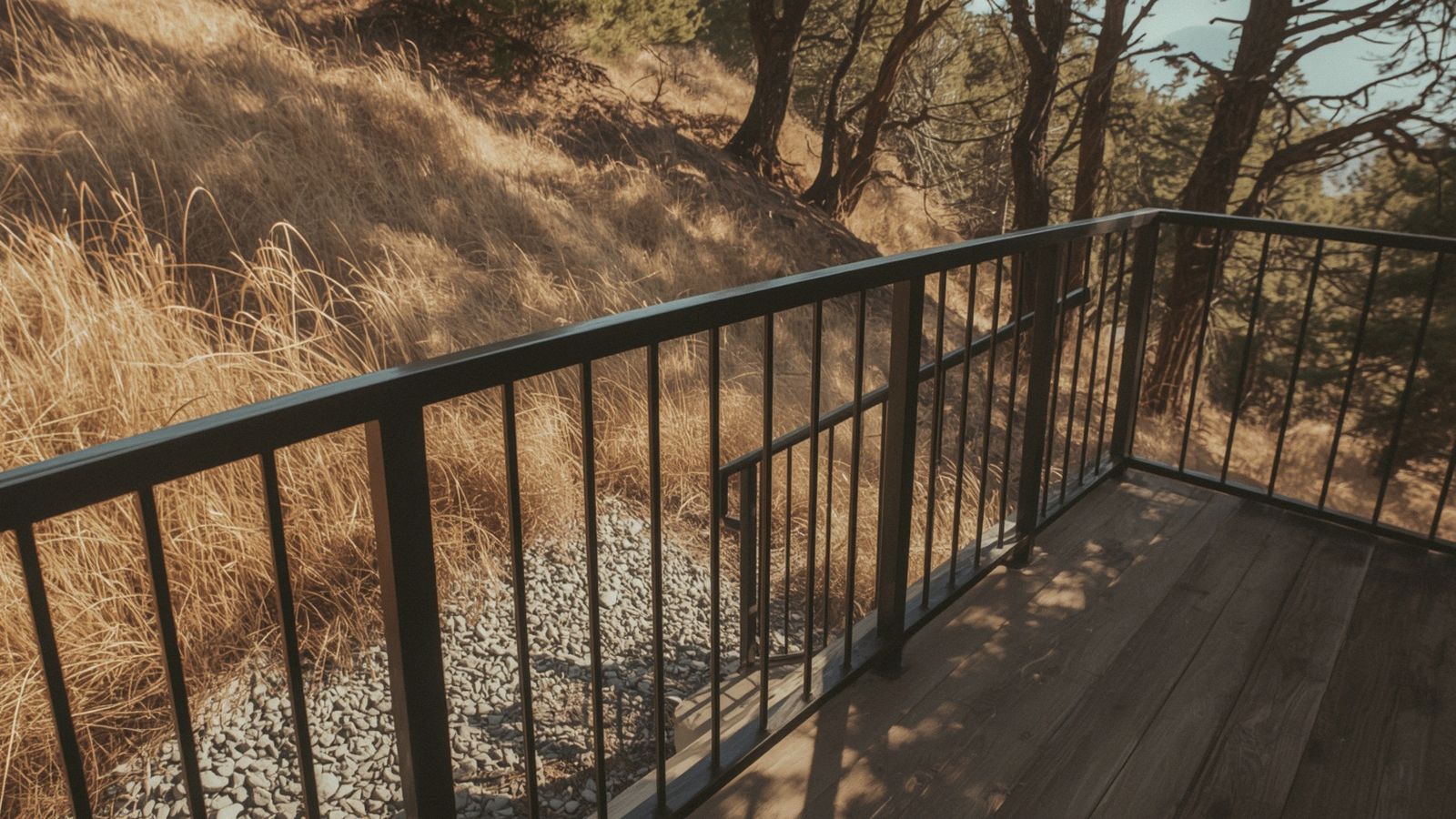
On a hillside lot in the Almaden or Evergreen foothills, a deck that steps down the slope can need a guard on one side and not the other. Measure the drop at the edge, not at the door.
Required guards must be 42 inches tall, measured from the walking surface to the top of the guard. On the open side of a stair, guard height is measured from a line connecting the tread nosings.
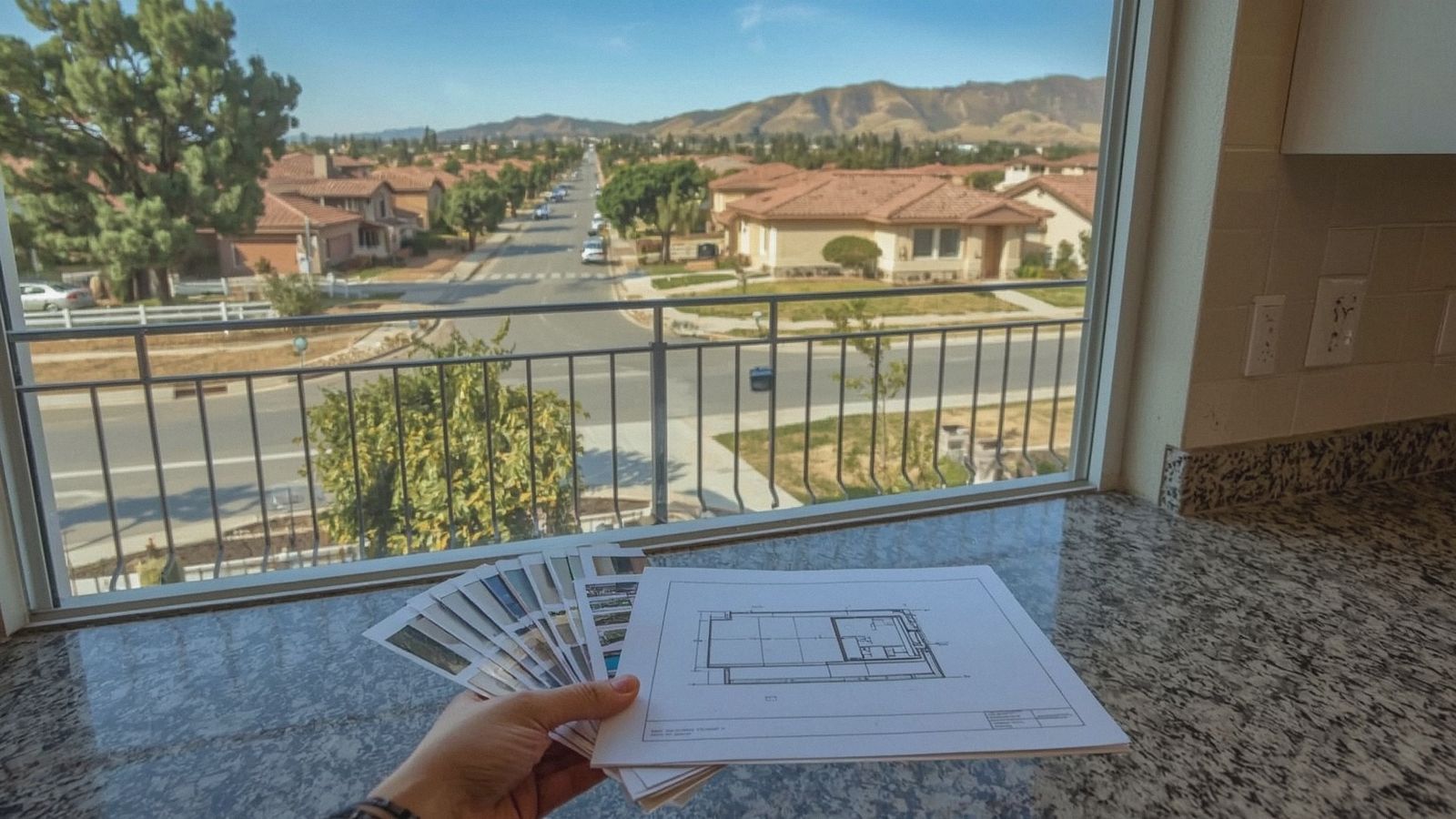
Planning a railing project in San Jose or the South Bay? We measure on site for free and give you a written range before anything is fabricated.
The 4-inch sphere and the 6-inch stair triangle
The opening rule is simple to remember: no opening in a required guard may let a 4-inch sphere pass through. That covers the gap between balusters, the space below the bottom rail and any decorative opening in an ornamental iron pattern. The goal is to keep a small child's head from fitting through.
There is one exception. On the open side of a stair, the triangle formed by the tread, the riser and the bottom rail of the guard may allow a sphere up to 6 inches.
Cable railing is where spacing gets tricky. A cable can be pushed apart, so the test is applied with pressure, not just with a ruler. Cables spaced about 3 inches apart, with posts about 4 feet apart to limit deflection and proper tension, are the usual way to keep a cable guard compliant over time. Glass panels avoid the issue entirely, as long as the gaps at the posts and the floor also stay under 4 inches.
Handrail height, grip and continuity
Guards and handrails are different things. A guard stops falls off an edge; a handrail is what you hold on a stair. A stair often needs both.
- Height. 34 to 38 inches above the stair nosing, measured vertically.
- Continuity. The rail must run continuously for the full flight so a hand never has to let go.
- Grip. A Type I circular handrail is 1¼ to 2 inches in outside diameter. The decorative 2-by-6 cap on top of a wood guard is not a graspable handrail.
- Commercial and ADA. Public buildings add rules such as 1½ inches of clearance to the wall and extensions at least 12 inches beyond the top riser.
Many 1980s and 1990s South Bay homes have a stair where the guard on the landing doubles as the handrail. Those can work, but the rail has to meet both the guard height and the handrail grip rules where they overlap. Our ADA and commercial handrail service covers the commercial side.
Loads, anchorage and earthquake country
Residential guards and handrails must resist a 200-pound concentrated load applied at the top. The infill, meaning balusters, cable or glass, must resist 50 pounds on a 1-square-foot area. Commercial guards under the California Building Code also have to resist 50 pounds per linear foot along the top.
Those numbers are why anchorage matters more than the railing itself. A heavy iron rail lag-screwed into a soft rim joist will pass a casual shake on install day and fail years later. The South Bay sits between the San Andreas fault in the Santa Cruz Mountains and the Hayward and Calaveras faults along the east side of the valley, and USGS estimated in 2014 a 72 percent chance of at least one magnitude 6.7 or larger Bay Area earthquake before 2043. There is no special seismic railing code, but engineered, through-bolted or embedded post connections and full welds are the right standard for a region like this.
Older homes with 36-inch guards
About 60 percent of San Jose's homes were built before 1980, and the share is higher in Campbell, Los Gatos and Saratoga. Many still have guards around 36 inches tall with pickets more than 4 inches apart, built under the rules of their time. California's current guard height is 42 inches, so those rails would not pass as new work.
An existing guard is not automatically illegal just because the code changed. The trouble starts when you replace it. Replacing more than about half of an existing guard is commonly treated as a replacement that must meet current code, so the new section has to be 42 inches with 4-inch spacing. Verify how your building division applies that before you plan a partial repair. If you are selling, a buyer's inspector will likely flag a low guard either way. Our railing repair service can tell you whether yours is worth repairing.
What the 2025 code cycle changed, and what it did not
California's 2025 building codes took effect January 1, 2026. The residential code was reorganized, and handrail provisions now sit in a new section of the California Residential Code. The core numbers (42-inch guards, the 4-inch sphere, 34 to 38-inch handrails) appear to carry forward unchanged.
Two other changes matter. First, the new California Wildland-Urban Interface Code now covers new buildings in the State Responsibility Area and in High and Very High fire hazard zones. It does not specifically mandate noncombustible railings. Second, AB 130 put a moratorium on new state and local residential building standards from October 1, 2025 to June 1, 2031, with exceptions such as wildfire hardening. For homeowners, that means the guard and handrail rules should stay stable for several years.
A five-minute check of your own railing
- Measure the height from the deck surface to the top of the guard. Under 42 inches is a flag on any guard more than 30 inches above grade.
- Try to pass a 4-inch object, such as a ball, through the widest gap. If it fits, the spacing is out.
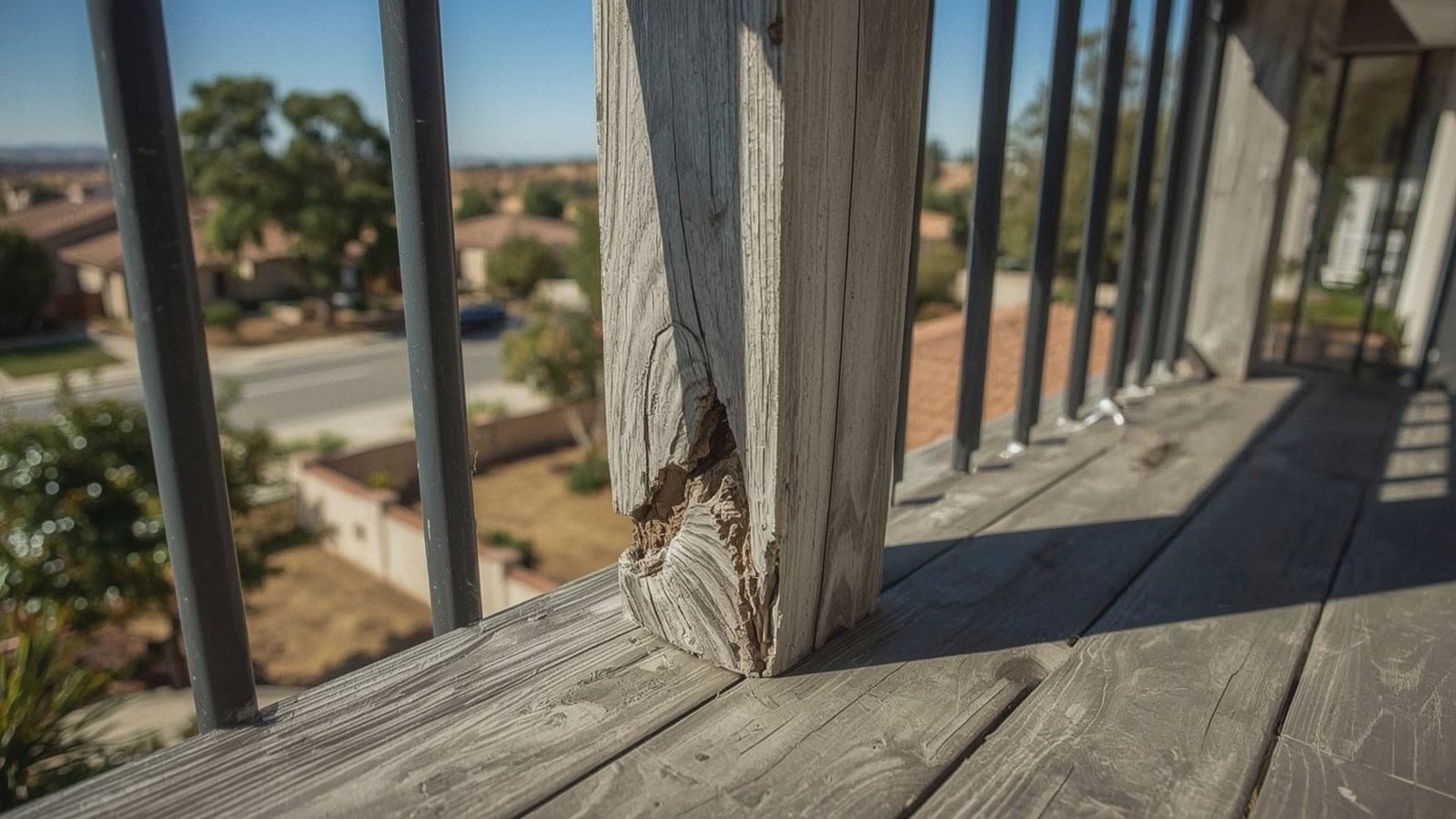
- Grab the top rail at a post and push hard. Movement at the base usually means loose anchors or rot.
- Look at the bottom of every iron post for rust bubbling or flaking where water collects.
- On stairs, measure handrail height from the nosing and check that you can wrap your hand around it.
If anything fails, we can measure it and tell you whether repair or replacement makes sense. Every drawing we make is checked against these rules before fabrication. See our deck and balcony railings and interior stair railings, read about San Jose railing permits, or call (408) 409-8723 for a free on-site estimate.
FAQ
Questions, Answered
Straight answers on cost, code, permits and materials. Still unsure? Call and ask.
What is the required railing height in California?
Required guards on decks, balconies, porches and the open sides of stairs must be 42 inches tall where the walking surface is more than 30 inches above grade. Stair handrails go 34 to 38 inches above the stair nosing. Confirm with your local building department before building.
How far apart can balusters be in California?
No opening in a required guard may let a 4-inch sphere pass. The only exception is the triangle at the open side of a stair, formed by the tread, riser and bottom rail, which may allow up to a 6-inch sphere.
Is my 36-inch deck railing legal?
An older 36-inch guard built under earlier rules is not automatically a violation while it stays as it is, but it does not meet today's 42-inch requirement. Replacing more than about half of it is commonly treated as a replacement that must meet current code. Check with your building department.
Does a deck under 30 inches need a railing?
The code requires a guard only where the walking surface is more than 30 inches above grade, measured within 36 inches horizontally of the edge. Many owners add a rail on lower decks anyway, and a sloping yard can push the outer edge over 30 inches even when the house side is lower.
How strong does a railing have to be in California?
Residential guards and handrails must resist a 200-pound concentrated load at the top, and the infill must resist 50 pounds on a 1-square-foot area. Commercial guards also need to resist 50 pounds per linear foot along the top rail.
Need Help in San Jose?
San Jose Custom Railing builds custom iron, cable, glass and aluminum railings across San Jose, CA and the South Bay. If this guide answered your question, the next step is a free on-site measure and a written range. See everything we do on our homepage, or reach out now.