
How to Choose a Custom Railing Company in San Jose
Choosing a custom railing company in San Jose starts with the job
Choosing a custom railing company in San Jose is easier once you know what your project will demand. A railing is a safety barrier first and a design feature second. It has to stop a fall, pass a building inspector and survive decades of dry summers and wet winters, and then it has to look right on your house.
That mix of skills is less common than it sounds. Some shops weld beautiful iron but have never tensioned a cable run. Some installers sell glass kits but cannot fabricate a custom post or match a 1970s scroll pattern. Some are general contractors who will subcontract the railing to whoever is free. None of that is visible on a website, so you have to ask.
This guide gives you the questions. It will not tell you who to hire. It tells you how to tell a capable fabricator from a risky one, using facts you can check yourself.
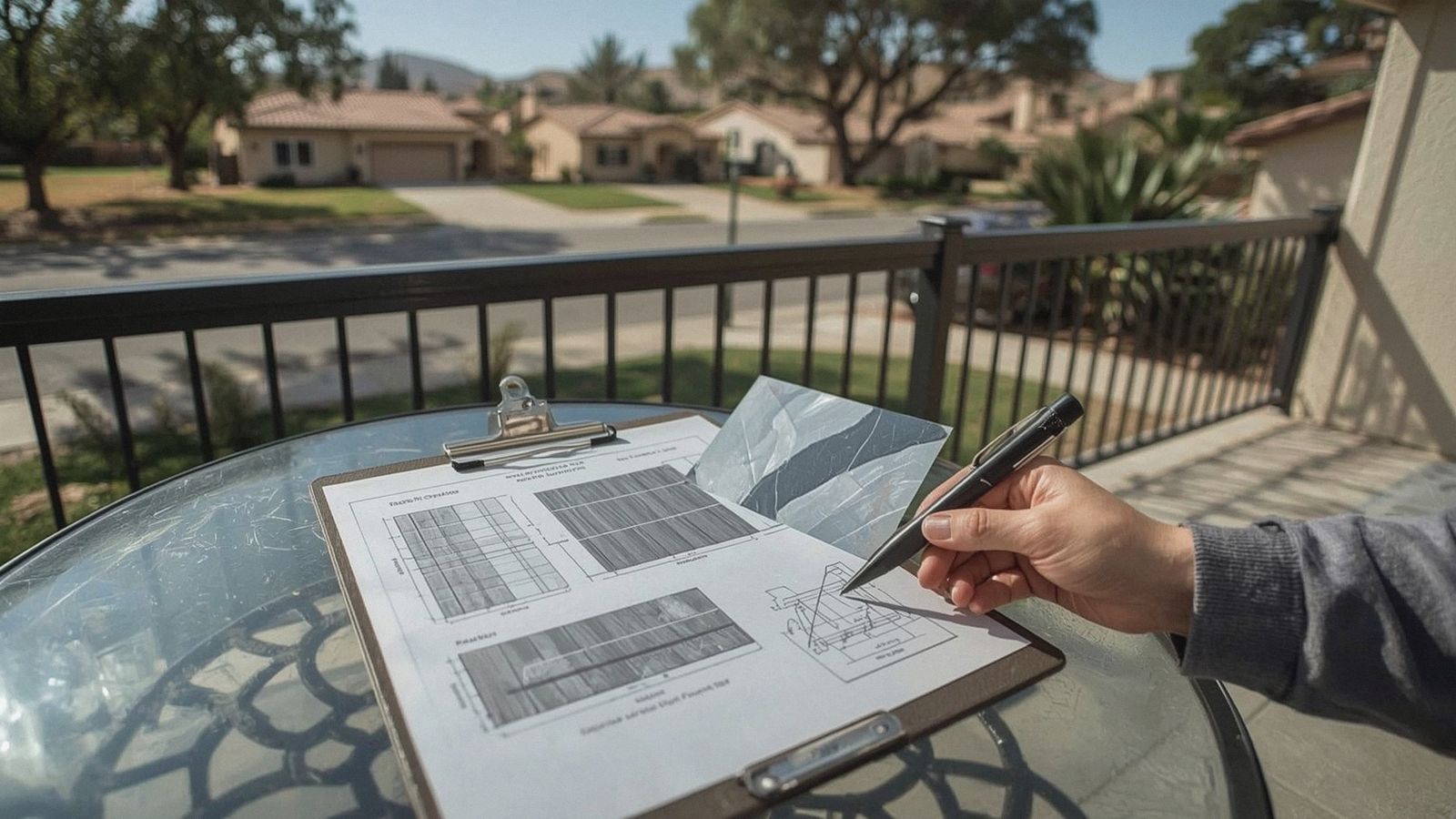
A ten-point vetting checklist
Run every bidder through the same list. A good company will answer each point without hesitating.
| Check | What a good answer sounds like |
|---|---|
| State license | A license number you can look up yourself on the CSLB website (cslb.ca.gov), active, in the business name on the bid. Ornamental metal work falls under the C-23 classification. |
| Insurance | Certificates for general liability and workers' compensation, sent directly from the insurer if you ask. |
| Who fabricates | A clear answer on whether posts and panels are welded in their own shop or bought as a kit. |
| Drawings | A dimensioned drawing before fabrication: height, spacing, post layout, anchorage and finish. |
| Code fluency | 42-inch guards, the 4-inch sphere rule and 34 to 38-inch handrails, explained without looking anything up. |
| Permits | They know whether your address is in the City of San Jose or unincorporated County, and who pulls the permit. |
| Anchorage | A specific plan: through-bolts, blocking, core-drilled posts or embedded plates, not just screws. |
| Finish | A named system, such as zinc primer under oven-cured powder coat or hot-dip galvanizing. |
| Written scope | Footage, removal and haul-away, patching, permit fees and inspection listed line by line. |
| Payment terms | A down payment within California's legal limit and progress payments tied to work done. |
On that last point, California Business and Professions Code section 7159.5 caps the down payment on a home improvement contract at $1,000 or 10 percent of the contract price, whichever is less. A bidder asking for half up front before any steel is cut is asking for something the law does not allow.
Planning a railing project in San Jose or the South Bay? We measure on site for free and give you a written range before anything is fabricated.
Questions that reveal real South Bay experience
Local knowledge matters here more than in most places, because the South Bay mixes very different housing, hazards and rules within a few miles. Ask each bidder a couple of these and listen for specifics.
- Older homes. About 60 percent of San Jose's 345,066 housing units were built before 1980, according to the Census Bureau's 2020 to 2024 American Community Survey. A capable bidder will check whether your existing guard is an older 36-inch rail and explain what replacing it triggers.
- Earthquake country. The Hayward fault zone extends southeast into the Evergreen area of east San Jose, and the Calaveras fault bounds the east side of the valley. Ask how posts will be anchored. You want engineered, through-bolted or embedded connections, not a lag screw into a tired rim joist.
- Fire maps. San Jose adopted the state's 2025 Fire Hazard Severity Zone maps on June 17, 2025. A bidder working in the foothills should know to check your parcel.
- Baylands air. Near Alviso and the north San Jose baylands, damp, salt-tinged marine air is harder on bare steel. Expect a recommendation for galvanizing or zinc-rich primer and 316 stainless cable.
- Apartments. If you own a building with three or more units, ask whether they have repaired guards flagged in an SB 721 or E3 balcony report.
Shop fabrication versus resold kits
Kits are not bad. Plenty of aluminum and cable systems are well engineered and fine for a straight deck run. The trouble starts when a project is not straight: a stair that changes pitch, a curved balcony, a post that has to dodge a downspout, or a new rail that must match iron already on the house.
A company with its own shop can cut, bend and weld to fit your site, then finish the piece as one unit. A kit installer has to make the site fit the kit, which often means extra posts, visible splices or a gap that just barely passes the 4-inch sphere test. Ask to see the shop or photos of work in progress. A real fabricator is usually proud to show both.
Also ask who installs. When the people who measured and welded the railing are the ones who set it, mistakes get caught early. When installation is handed to a different crew, the measurements travel through more hands.
Red flags that should end the conversation
- No license number on the bid, or a number that comes back expired or under a different name.
- A price given over the phone without anyone measuring, followed by a large deposit request.
- "You don't need a permit for that" on an elevated deck or balcony guard, said before they know your address.
- Cable runs with posts spaced well beyond about 4 feet and no mention of tension or deflection.
- Glass panels with no word on whether the glass is tempered or laminated.
- A finish described only as "paint" for exterior steel.
- Pressure to sign the same day because a discount expires.
- Reluctance to put the scope, schedule and payment terms in writing.
Any one of these is reason enough to get another bid. Two or more usually means the job will cost more in the end than the bid suggests.
How to compare two or three bids fairly
Bids for the same railing can vary widely, and the cheapest one often leaves things out. Before you compare totals, line them up so each covers the same work.
| Line item | Why it changes the total |
|---|---|
| Linear footage and corners | Corners and turns commonly add 20 to 30 percent. |
| Stair sections | Raked sections take more layout, cutting and welding than level runs. |
| Removal and disposal | Old iron, wood or glass has to go somewhere. |
| Anchorage and repairs | Rotten framing or cracked concrete at post locations has to be fixed first. |
| Finish system | Galvanizing plus powder coat costs more than primer and paint, and lasts longer. |
| Permits and drawings | Fees typically run about $50 to $500 depending on the city and scope. |
For a sense of what each material should cost per foot here, see our 2026 San Jose railing cost guide, or try the railing cost calculator before the first estimate.
How San Jose Custom Railing answers the same checklist
We hold ourselves to the list above. We are licensed and insured, and we fabricate in our own shop, so the crew that measures your stair or deck is the crew that builds and sets it. Every project gets a dimensioned drawing, and every drawing is checked against the 42-inch guard height, the 4-inch sphere rule and the 34 to 38-inch handrail range before any steel is cut.
We build all four main materials, which means we can give you an honest comparison instead of steering you toward the only thing we sell. That includes wrought iron railings, stainless cable railings, glass railings and powder-coated aluminum, plus railing repair when replacement is not needed. We also handle permit drawings and HOA submittals.
Run us through the checklist like anyone else. Call (408) 409-8723 or request a free on-site estimate, and see our San Jose railing page for neighborhood-level detail.
FAQ
Questions, Answered
Straight answers on cost, code, permits and materials. Still unsure? Call and ask.
What license should a railing contractor have in California?
Look for an active license from the Contractors State License Board that you can verify on cslb.ca.gov. Ornamental metal work such as railings and gates falls under the C-23 classification, and some general contractors also hold licenses that cover railing work. Confirm the license is active and in the same business name that appears on your bid.
How much can a railing contractor ask for up front?
For a home improvement contract in California, the down payment cannot exceed $1,000 or 10 percent of the contract price, whichever is less, under Business and Professions Code section 7159.5. Later payments should match the work completed or materials delivered.
How many bids should I get for a custom railing?
Two or three detailed bids are usually enough, as long as each one covers the same footage, corners, stairs, removal, finish and permits. Comparing totals without lining up the scope is how homeowners end up with the bid that left something out.
Is the cheapest railing bid ever the right choice?
It can be, if it covers the same scope, the same finish system and the same anchorage as the others. Check whether it includes drawings, permits, haul-away and repairs to the framing at post locations. A low bid that skips those items usually grows once work begins.
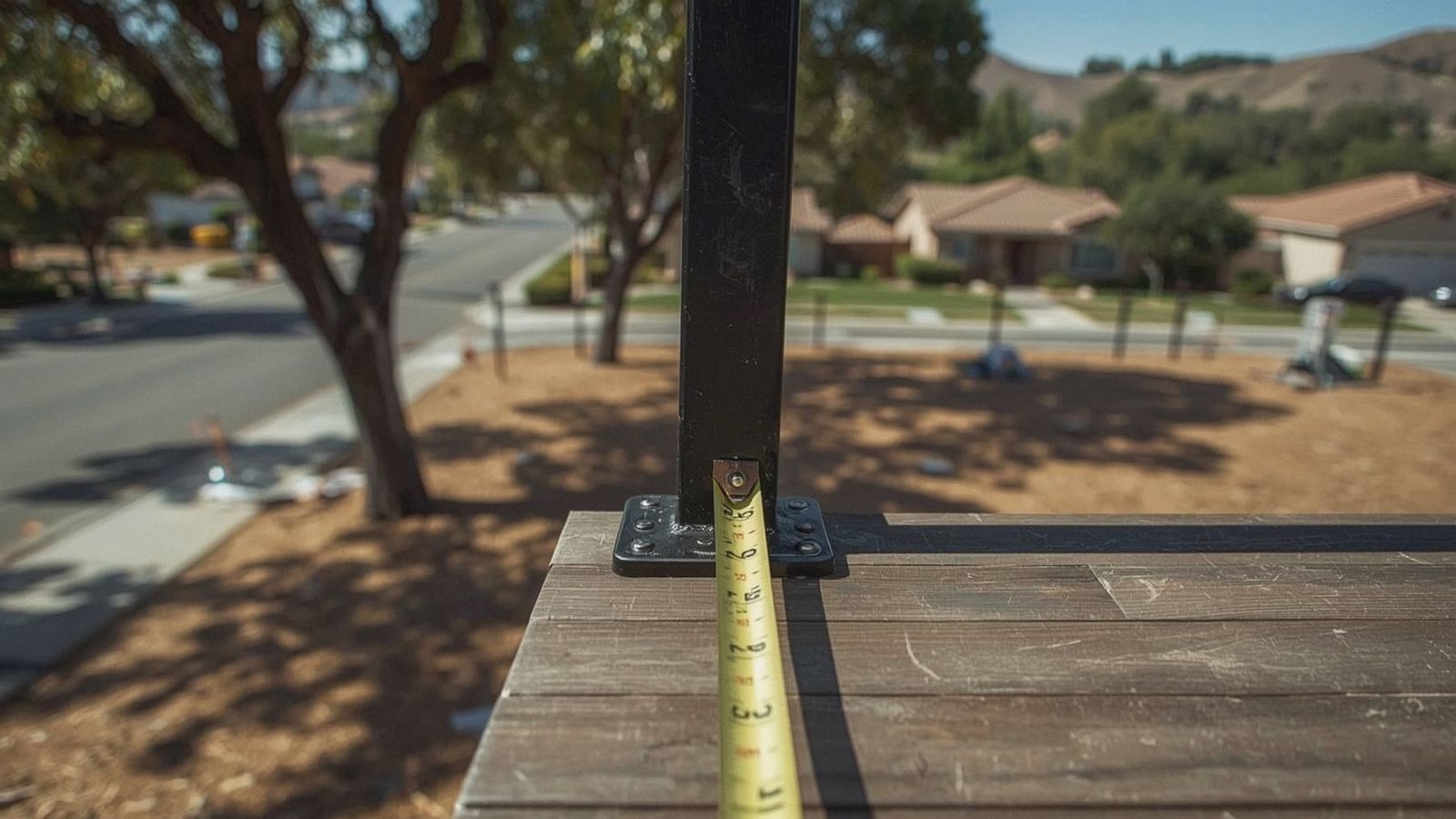
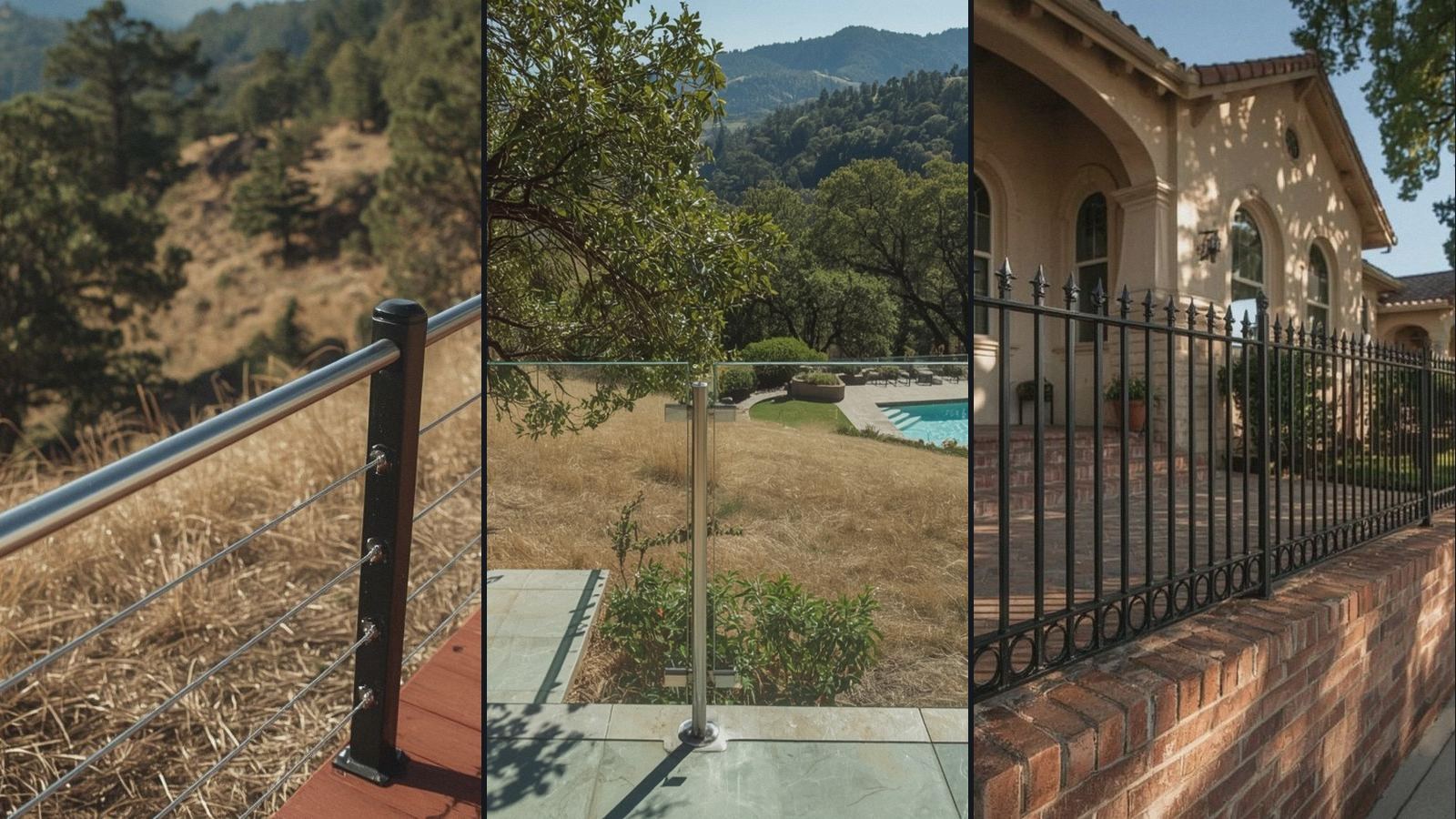
Need Help in San Jose?
San Jose Custom Railing builds custom iron, cable, glass and aluminum railings across San Jose, CA and the South Bay. If this guide answered your question, the next step is a free on-site measure and a written range. See everything we do on our homepage, or reach out now.