
What a Stair Railing Remodel Costs in San Jose in 2026
The Oak Handrail and Wood Spindle Staircase
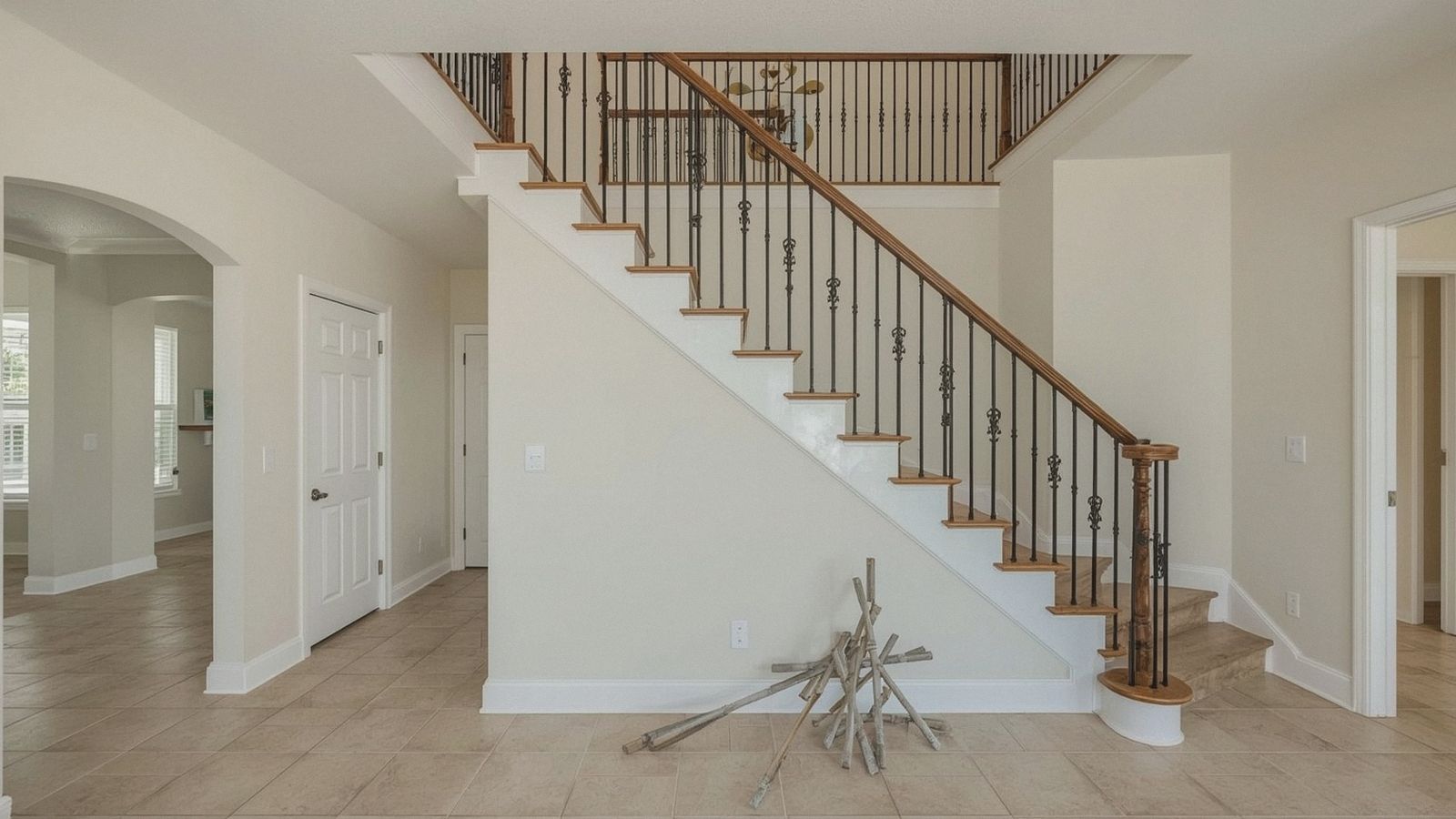
A stair railing remodel cost in San Jose depends mostly on how much of the old railing you keep. The typical starting point is familiar: a two-story foyer with an oak handrail, turned wood spindles and a box newel at the bottom. That package went into thousands of South Bay homes built in the 1980s, 1990s and 2000s. Census data show about 40% of San Jose's housing units were built in 1980 or later, and in Milpitas the median home was built in 1987, with 35% of units built in 2000 or later.
Those railings are usually sound. They just look dated, the finish on the handrail has worn where hands slide, and spindles loosen over time. Swapping the spindles for iron balusters, or replacing the full railing, is one of the quickest ways to change how an entry feels.
The price estimator needs JavaScript. For a quick quote on a stair railing remodel, call (408) 409-8723.
Use the estimator above for a rough number, then read on for what drives the price.
Three Levels of Stair Railing Update
| Option | What changes | Best when |
|---|---|---|
| Baluster swap | Wood spindles out, iron balusters in; existing handrail and newels stay and get refinished | The oak handrail is solid and you like its shape |
| New handrail and balusters | New handrail, newel posts and iron balusters; stringer and treads stay | The handrail is worn, the wrong profile or the newels wobble |
| Full custom railing | Steel, cable or glass railing designed from scratch, often with a metal or wood cap | You want a modern look or a feature staircase |
The baluster swap is the most popular because it keeps the existing structure. Balusters are cut to length, set into the handrail and tread or shoe rail, and glued or fastened. Stairs with a solid half-wall instead of spindles can also be opened up, though that is a bigger job with drywall and framing work.
Planning a railing project in San Jose or the South Bay? We measure on site for free and give you a written range before anything is fabricated.
2026 Prices and a Sample Project
These are our published 2026 ranges for the South Bay. Your free on-site estimate replaces them with a fixed number.
| Scope | Installed per linear foot |
|---|---|
| Baluster swap, keep handrail | $40–$70 |
| New handrail, newels and iron balusters | $60–$100 |
| Interior stair railing, typical range | $40–$100 (about $900–$2,500 for ~25 ft) |
| Wrought iron, standard to upgraded | $65–$135 |
| Hand-forged ornamental iron | $300–$900 |
| Glass railing | $150–$600 |
| Cable railing | $75–$260 |
Sample project: a 1990s two-story home in Evergreen with a 14-foot stair run plus an 11-foot balcony overlooking the foyer, about 25 feet in all. A baluster swap at $40–$70 per foot comes to roughly $1,000–$1,750. Replacing the handrail and newels as well, at $60–$100 per foot, comes to roughly $1,500–$2,500. The stair section costs more per foot than the level balcony because every baluster is cut at the stair angle, and each corner or turn adds about 20–30% to that section.
What Moves the Price Up or Down
- Stair geometry. Straight runs are fastest. Winders, curved stairs and multiple landings add cutting and fitting time.
- Baluster style. Plain square or round bars cost least. Twists, baskets, knuckles and scroll panels cost more.
- Handrail condition. A handrail that needs stripping and refinishing adds labor; one that needs replacing adds material.
- Stain matching. Matching new oak to old, or restaining a handrail and newels to a darker color, takes time and test samples.
- Removal. Pulling old spindles, filling holes in treads and touching up paint are part of the job and part of the price.
- Code upgrades. If a balcony guard is short or open, bringing it to 42 inches with tighter spacing adds parts.
For other projects around the house, our custom railing cost guide covers exterior railings by material.
Picking Balusters, Handrails and Finishes
- Plain square bars in satin black read clean and current, and suit nearly any home.
- Mixed patterns (for example, one twist or basket for every three plain bars) add detail without looking busy.
- Hollow vs solid iron. Hollow balusters are lighter and cost less; solid bars feel heavier and resist dents. Both are common for interior stairs.
- Handrail profile. Most oak handrails can stay. If you replace one, a profile that fits a hand comfortably, sized within the Type I range of 1-1/4 to 2 inches for a round rail, is easier to hold.
- Finish. Satin black, oil-rubbed bronze and silver vein are common powder-coat or factory finishes. Pair dark balusters with a darker handrail stain for contrast, or keep a natural oak tone for warmth.
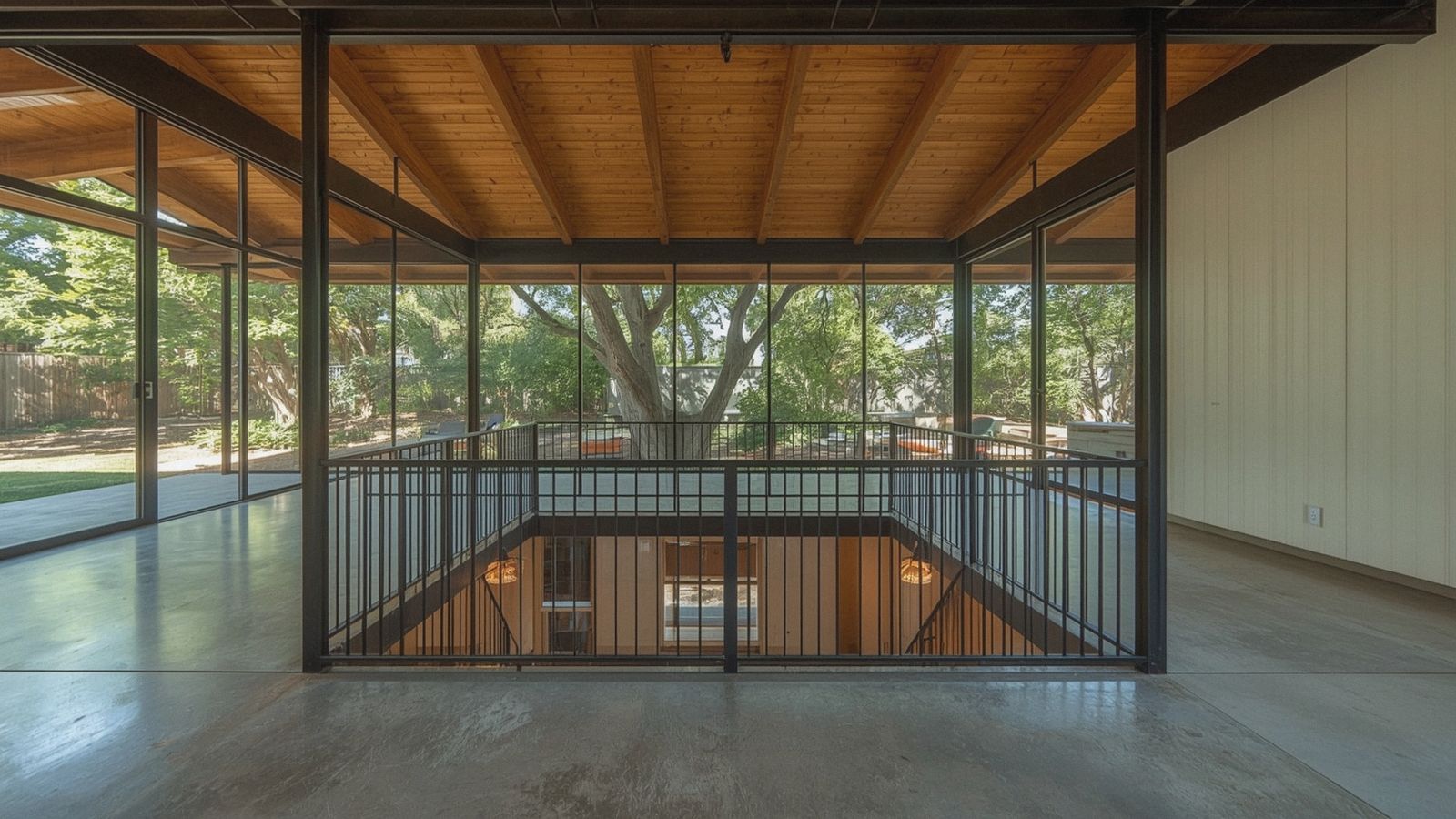
- Steel or cable for modern homes. A flat-bar steel railing or horizontal cable suits a contemporary remodel better than traditional balusters.
Code Checks for an Interior Stair Remodel
San José's 2025 Residential Construction Guidelines summarize the numbers we build to:
- Handrail height 34 to 38 inches, measured from the sloped line of the stair nosings, continuous for the full flight.
- Grip size for a round (Type I) handrail 1-1/4 to 2 inches, with at least 1-1/2 inches of clearance from the wall.
- Guards at least 42 inches high at landings and open balconies, unless the guard serves as the handrail on the open side of a stair.
- Openings no larger than 4 inches, except 4-3/8 inches at the sides of stairs and 6 inches at the triangle under the bottom rail.
- A city policy that handrails have no vertical drop and no more than a 45-degree shift in direction, with no 90-degree bend.
Older stairs may not meet every number, especially balcony guard heights in 1970s and 1980s homes. Replacing more than about half of a guard is commonly treated as a replacement that must meet current code, so we build new work to today's numbers. Ask the Permit Center whether your scope needs a permit.
From Measure to Install
Measure and Design
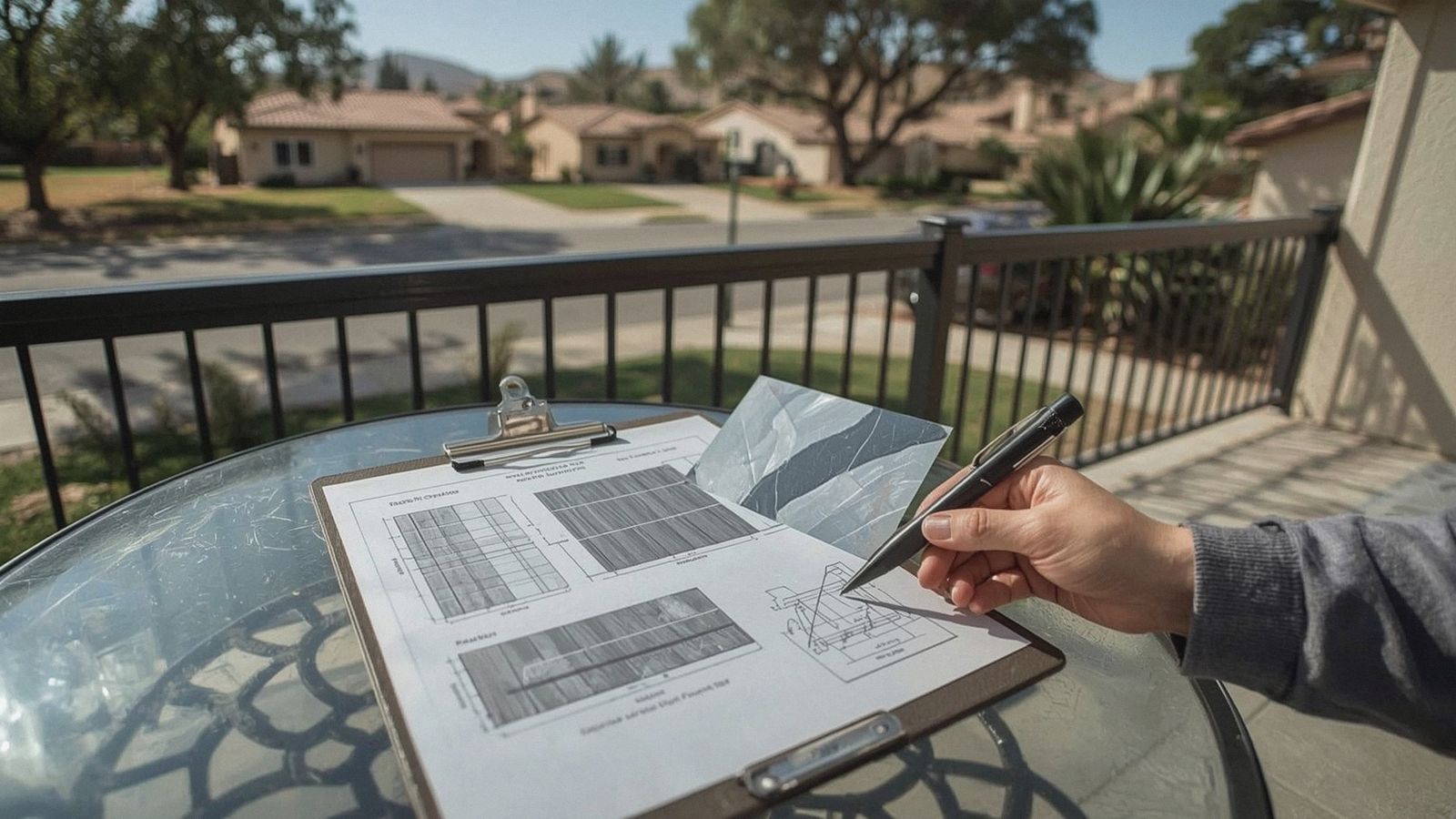
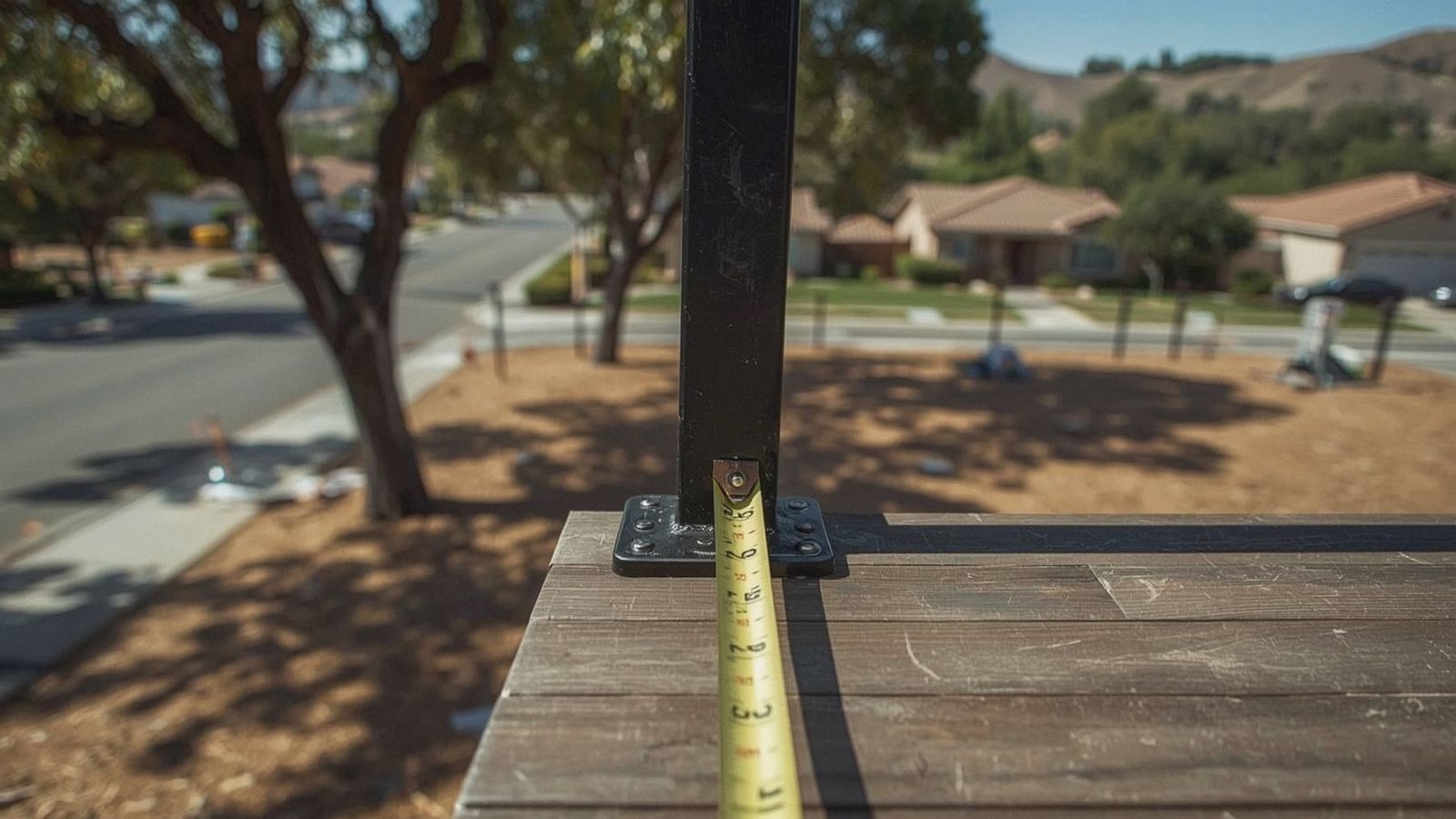
We measure every run, count balusters and photograph the stair, then send a layout and price.
Order and Prep
Balusters, shoes and any new handrail parts are ordered or fabricated, and finish samples are confirmed.
Install
Most baluster swaps take one to two days on site, including removal and cleanup.
Finish and Walkthrough
Handrail refinishing, touch-ups and a final check of every baluster and connection.
You can keep using the stairs during most of the job. We protect floors and treads and keep the work area clean at the end of each day.
Get a Firm Number for Your Stairs
To get the most accurate estimate, have a few things ready before the visit: photos of the full staircase from the bottom and the top landing, a rough count of spindles, and a sense of whether you want to keep the handrail. If you have a finish in mind, a photo of a railing you like helps us match it. We will confirm measurements on site, check that the handrail, newels and treads are solid enough to keep, and give you a written price with the baluster style, finish and schedule spelled out.
Browse baluster and handrail options on our interior stair railings page, see forged and ornamental choices on our wrought iron railings page, or try the railing cost calculator. If you live in one of the newer townhome communities, our Milpitas page covers local notes. Then call (408) 409-8723 for a free on-site estimate.
FAQ
Questions, Answered
Straight answers on cost, code, permits and materials. Still unsure? Call and ask.
How much does it cost to replace wood spindles with iron balusters in San Jose?
A baluster swap that keeps the existing handrail typically runs about $40–$70 per linear foot installed in 2026. A typical 25-foot stair and balcony comes to roughly $1,000–$1,750. Your on-site estimate gives the exact number.
Can I keep my oak handrail and just change the spindles?
Yes, if the handrail and newel posts are solid. We remove the spindles, install iron balusters into the existing handrail and treads, and can refinish the handrail so it matches the new look.
How long does a stair railing remodel take?
Most baluster swaps take one to two days on site once materials are in. New handrails, curved stairs or custom fabrication add time for ordering or building parts.
Do I need a permit to replace stair balusters?
It depends on scope. Ask the San Jose Permit Center about your project. Whatever the permit answer, we build to the current code numbers: 34 to 38-inch handrails, 42-inch guards and 4-inch openings.
Need Help in San Jose?
San Jose Custom Railing builds custom iron, cable, glass and aluminum railings across San Jose, CA and the South Bay. If this guide answered your question, the next step is a free on-site measure and a written range. See everything we do on our homepage, or reach out now.