
California Pool Gate and Fence Code for South Bay Homeowners
What Triggers the State Pool Barrier Rules
California pool gate and fence code starts with the Swimming Pool Safety Act in the Health and Safety Code. Under section 115922, whenever a building permit is issued for a new pool or spa, or for remodeling an existing one, at a private single-family home, the pool must be equipped with at least two of seven drowning prevention safety features. That requirement has applied since January 1, 2018.
The key word is remodel. Homeowners expect barrier rules when they build a new pool, but a permitted pool renovation in a Willow Glen, Cambrian or Almaden backyard can bring the same two-of-seven question with it. Plan the gate and fence at the same time as the pool work, not after the final inspection is already scheduled.
The building code adds its own pool barrier details, and cities can amend them, so use this guide to understand the state rules and then confirm the specifics with your building department. Planning a pool gate or enclosure? Call (408) 409-8723.
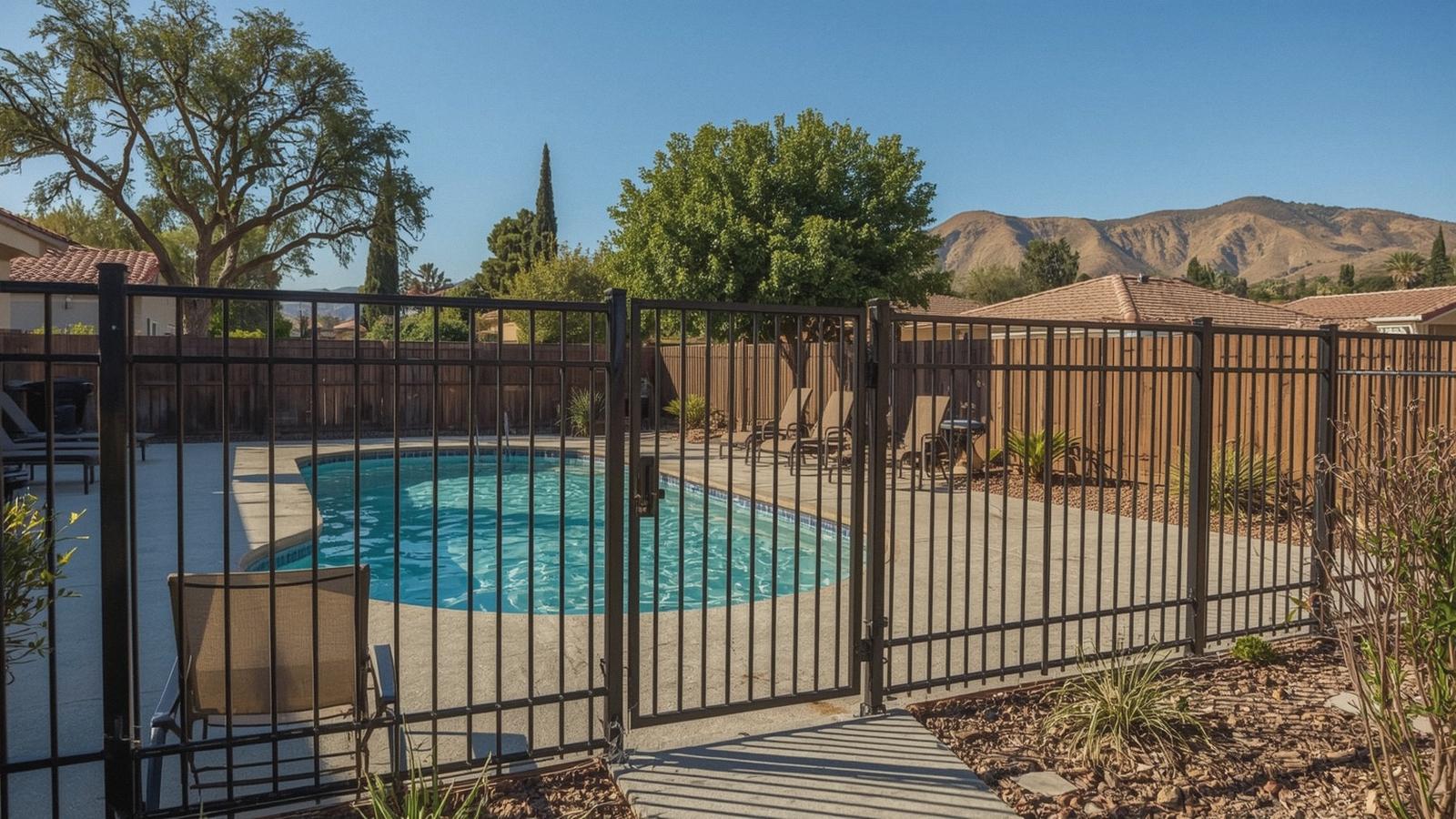
The Seven Drowning Prevention Features
Section 115922 lets a homeowner choose any two of these:
- An enclosure that isolates the pool or spa from the house and meets section 115923 (the fence-and-gate option).
- Removable mesh pool fencing meeting ASTM F2286, with a gate that is self-closing and self-latching and can accept a key lockable device.
- An approved safety pool cover meeting ASTM F1346.
- Exit alarms on the home's doors that provide direct access to the pool or spa.
- A self-closing, self-latching device on those doors, with a release mechanism placed no lower than 54 inches above the floor.
- An alarm that sounds when a child enters the water, independently certified to ASTM F2208.
- Other means of protection, if the building official finds it gives protection equal to or greater than the options above.
A permanent enclosure has one big advantage: it works every hour of the day without anyone remembering to arm, close or roll anything. Many families combine it with door alarms. Covers and water alarms can be good second layers, but each one depends on someone using it correctly every time.
Planning a railing project in San Jose or the South Bay? We measure on site for free and give you a written range before anything is fabricated.
Enclosure Rules in Section 115923
If you choose a fence-and-gate enclosure, section 115923 sets the core standards:
| Requirement | Section 115923 |
|---|---|
| Gate swing | Access gates open away from the pool |
| Gate closing | Self-closing, with a self-latching device |
| Latch height | Self-latching device placed no lower than 60 inches above the ground |
| Enclosure height | At least 60 inches |
| Bottom clearance | No more than 2 inches from the ground to the bottom of the enclosure |
| Openings | Gaps or voids must not allow passage of a 4-inch sphere |
| Climbability | Outside surface free of protrusions, cavities or other features that could serve as handholds or footholds for a child under five |
Notice how this differs from a deck guard. A deck guard is 42 inches tall and is meant to stop a fall. A pool barrier is 60 inches tall and is meant to stop a climb. Horizontal rails that are fine on a deck can act as a ladder on a pool fence. The California Residential Code's pool barrier provisions add further detail, including measurement points and alternatives for latch placement, so confirm those with your building department before ordering hardware.
Turning the Rules Into a Gate That Works
A pool gate passes inspection on day one and then has to keep working for years in sun, splash and chlorine. When we build one, these are the details we focus on:
- Picket layout. Openings under 4 inches everywhere, including the hinge gap, the latch side and the space between the gate and the ground.
- Rails on the pool side. We keep horizontal members off the outside face, or space them so they do not work as steps.
- A closer sized to the gate. Spring hinges or a hydraulic closer rated for the gate's weight, adjusted so the gate swings shut and latches from any open position.
- A pool-rated latch. A magnetic or gravity latch with the release at the required height and provision for a key lock.
- Posts that stay plumb. Gate posts set in concrete footings sized for the swing, so the gate does not sag and open the bottom gap.
- Corrosion protection. Hot-dip galvanized or zinc-primed steel under powder coat, or powder-coated aluminum, which does not rust at all.
South Bay summers are hard on spring hinges. Los Gatos averages about 27 days a year at 90°F or above (NOAA 1991–2020), and spring hinges lose tension with years of heat and use, so we check closer adjustment at install and show owners how to tune it.
San Jose Permits and Local Checks
Pools in San Jose are permitted through the city's Permit Center at City Hall, 200 E. Santa Clara St., and online through SJPermits.org, where you can also schedule inspections. Other South Bay cities have their own building divisions and handouts, and some set their own barrier details on top of the state law, so treat your city's pool handout as the final word.
A few practical notes for South Bay yards:
- Side yards. Many pool enclosures use the house wall as one side, which makes the side-yard gate part of the barrier. An old wood gate that swings into the yard will not pass.
- Sloped lots. In the Almaden, Evergreen and west-valley foothills, a gate on a grade needs a closer strong enough to swing uphill, and the 2-inch bottom gap must be checked along the whole run.
- HOA communities. Many associations review fence and gate designs. Our HOA approval guide covers what to submit.
- Fire zones. If the fence ties into the house in a mapped fire zone, a metal gate and first fence panel keep combustible material away from the walls.
Pool Gate Problems We Fix Most Often
- Gates that swing toward the pool. Usually an old side-yard gate pressed into service. Rehanging it to swing outward can mean moving the posts.
- Closers that stopped closing. If the gate stalls halfway or bounces off the latch, it is no longer self-closing in practice.
- Latches at hand height. Convenient for adults and just as convenient for a curious child. Keep the release where the rules put it.
- Gaps that grew. Settled pavers, eroded soil or a sagging gate can open the bottom clearance past 2 inches.
- Climbing aids. Pool equipment, planters, a bench or a low wall placed against the outside of the fence can defeat a barrier that passed inspection.
- Decorative fences pressed into service. Many ornamental iron fences have 5-inch openings or scrollwork that works as a foothold. They need retrofit panels or replacement.
Test your gate every month or two: open it fully, halfway and a few inches, and let go each time. It should close and latch on its own every time.
How We Build Pool Gates and Enclosures
We fabricate steel and aluminum pool gates and matching fence sections in our shop, sized to your openings and checked against the enclosure rules on the drawing before any steel is cut. We can match an existing iron fence so the pool barrier looks like part of the original yard, and we set and adjust the closer and latch on site.
See styles on our custom gates, wrought iron railings and aluminum railings pages, check local permit notes on our San Jose page, and compare guard and handrail rules in our California railing code guide. Then call (408) 409-8723 for a free on-site estimate.
FAQ
Questions, Answered
Straight answers on cost, code, permits and materials. Still unsure? Call and ask.
How high does a pool gate latch have to be in California?
Health and Safety Code section 115923 says the self-latching device on an enclosure gate must be placed no lower than 60 inches above the ground. The residential code has its own barrier provisions, so confirm the accepted latch location with your building department before buying hardware.
Which way should a pool gate swing?
Away from the pool. Under section 115923, access gates through the enclosure open away from the pool and must be self-closing and self-latching. A child pushing on the gate from outside should be pushing it shut.
How tall does a pool fence have to be in California?
At least 60 inches, with no more than 2 inches of clearance at the bottom, no openings that pass a 4-inch sphere, and no handholds or footholds on the outside that a young child could use to climb.
Do I have to upgrade my pool fence if I am not remodeling?
The state two-of-seven rule applies when a building permit is issued for a new pool or spa or a pool remodel at a single-family home. Some cities have additional rules, so check yours, and consider upgrading anyway if young children live in or visit the home.
Need Help in San Jose?
San Jose Custom Railing builds custom iron, cable, glass and aluminum railings across San Jose, CA and the South Bay. If this guide answered your question, the next step is a free on-site measure and a written range. See everything we do on our homepage, or reach out now.